Innova School: If you’ve been searching for a school model that truly breaks the mold — one that combines technology, personalized learning, and affordability — Innova School deserves your full attention.
Launched in Peru in 2011 and now operating across Latin America in countries including Colombia and Mexico, Innova School has become one of the most talked-about education systems in the world. It’s not a traditional school. It’s not a tech startup pretending to be a school. It’s something genuinely new: a carefully designed, research-backed, and results-proven network of schools built from the ground up to give middle-class and low-income families access to world-class education at a price they can actually afford.
In this guide, you’ll get a complete breakdown of what Innova School is, how its model works, who founded it, what students and parents can expect, how its results stack up, and why educators, policymakers, and parents around the world are paying close attention to it.
What Is Innova School?
Innova School is an affordable, high-quality private school network operating primarily in Peru, Colombia, and Mexico. It was founded in 2011 by Carlos Rodriguez-Pastor, a Peruvian businessman and chairman of Intercorp, a major financial services and retail conglomerate. Recognizing that Peru ranked at the very bottom of the Programme for International Student Assessment (PISA) — a global education survey covering 65 countries — Rodriguez-Pastor knew something had to change.
His goal was bold: create a school system that offered international-quality education to middle-class families for around $130 per month. To build it, he partnered with IDEO, one of the world’s most respected design and innovation firms, known for redesigning complex systems for organizations like the Red Cross and Singapore’s immigration services.
The result was Innova School — a comprehensive K–12 educational experience redesigned from the ground up, covering everything from classroom architecture to curriculum structure, teacher training systems, and financial models.
The Founding Story: How IDEO Built a School System from Scratch
The story of Innova School is as remarkable as the institution itself.
In 2010, Rodriguez-Pastor’s company had five existing schools in Peru but realized quickly that the traditional model couldn’t scale. There weren’t enough qualified teachers in the country, land costs were rising, and the overall quality of Peruvian education was severely lacking. IDEO was brought in with one of the most ambitious briefs in education history: redesign the entire K–12 learning experience, from curriculum to classroom space to teacher training, and do it all while keeping tuition at roughly $100–$130 a month.
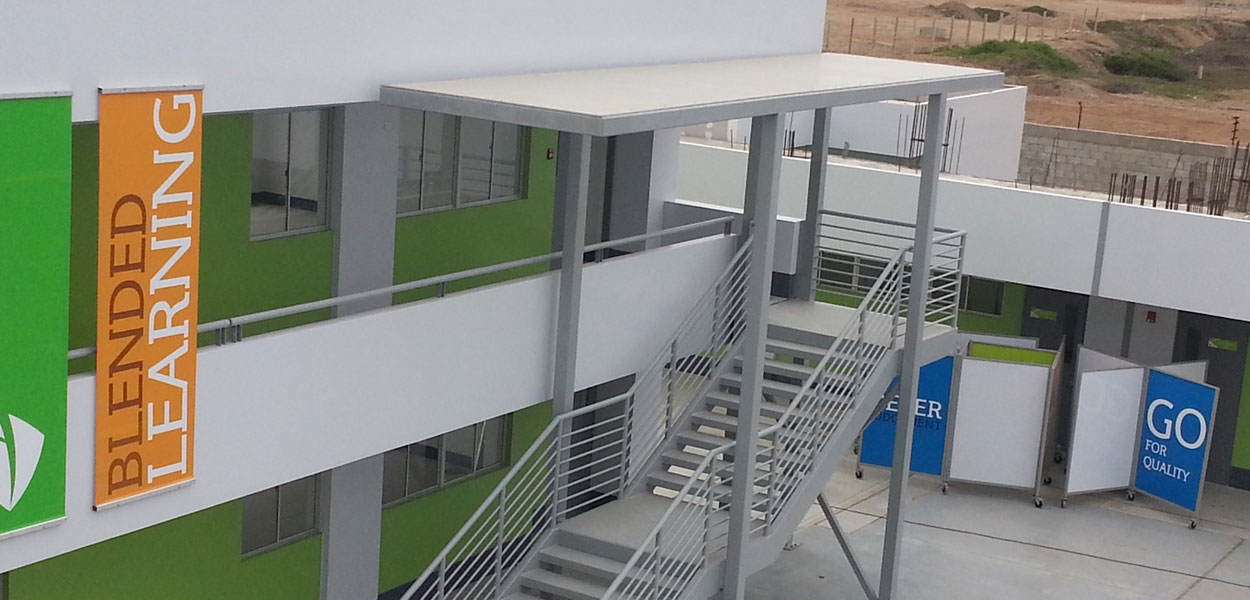
IDEO researchers visited innovative schools around the world, studied analogous industries like hospitality, health care, and retail, and ultimately designed a holistic business model that tied academics, space, operations, and finances together. By 2012, Innova Schools opened its doors with a new blended learning model and a vision to become the largest private school network in Latin America.
Today, Innova Schools serves over 70,000 students across dozens of campuses, with continued expansion underway.
The Innova School Learning Model: iBlended Learning Explained
At the heart of Innova School is what the institution calls iBlended Learning — a thoughtfully structured combination of digital and face-to-face instruction that gives students more control over their learning while keeping teachers central to the process.
What Is iBlended Learning?
iBlended Learning is a formal educational strategy where students learn partly through online programs — with some control over time, pace, and learning path — and partly through direct teacher-guided instruction. It’s not simply “using tablets in class.” It’s a fundamentally different way of organizing the school day and the learning experience.
Two Core Learning Formats
Innova’s school day is built around two distinct formats:
1. Group Learning (Collaborative Mode) Students work together in collaborative settings, guided by a teacher. This mode follows a constructivist, project-based approach. Students investigate real-world problems, collaborate with peers, ask questions, argue ideas, reflect on findings, and communicate their conclusions. The teacher’s role here is to organize, propose challenges, guide exploration, and provide feedback — not simply lecture.
2. Solo Learning (Self-Directed Mode) In solo learning, students use digital platforms — including tools like Khan Academy, Pearson, and Time to Know — to develop foundational content knowledge at their own pace. This allows students to revisit materials as needed, move ahead when they’re ready, and take genuine ownership of their progress.
The Flipped Classroom Element
Innova also incorporates a flipped classroom model in many courses. Students begin learning new material at home through digital resources, then come to school prepared to tackle more complex, collaborative problems with their classmates and teachers. This maximizes the value of classroom time and deepens learning.
The Physical Space
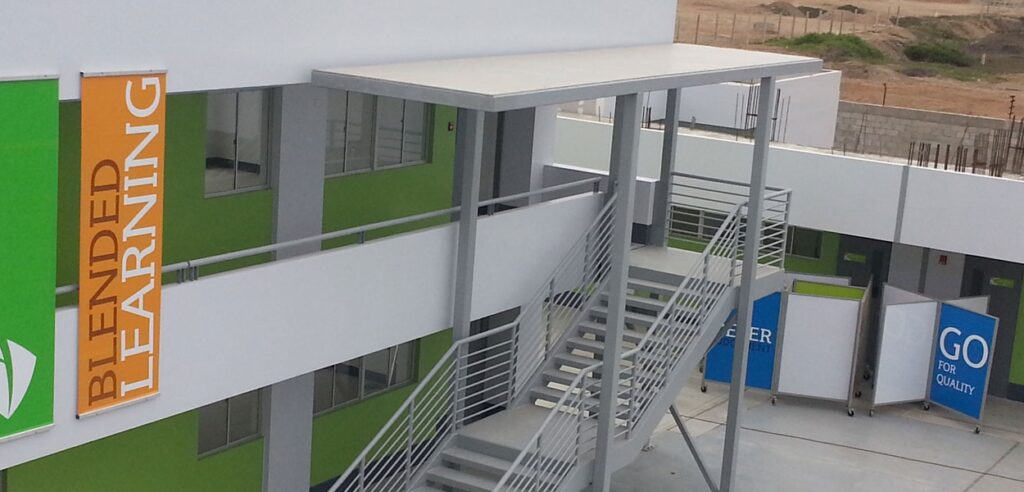
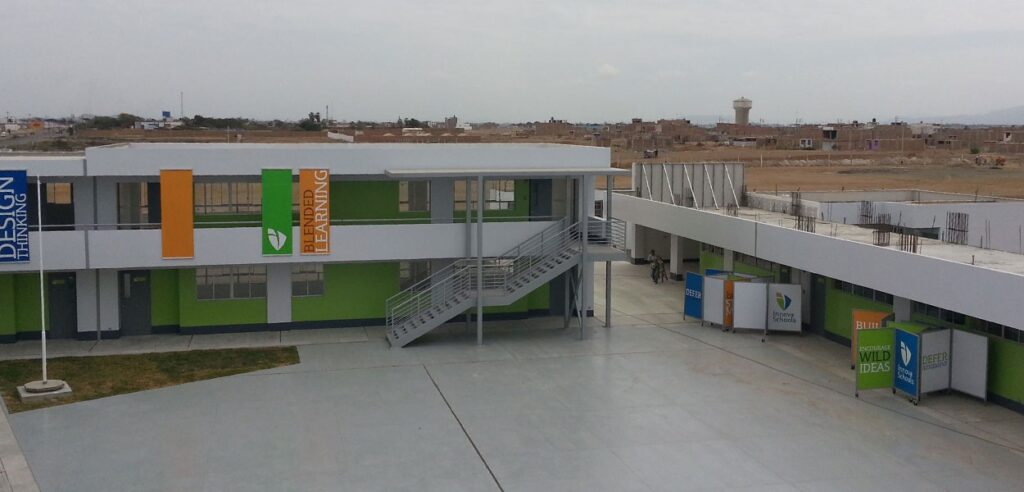
Innova’s classrooms are specifically designed to support this model. Students typically spend the first five hours of the day in standard classes of 30. Then, moveable walls between classrooms are opened up and two classes of 30 combine into a larger group of 60 students, allowing for broader project-based activities and collaborative work — a physical design innovation that most traditional schools simply cannot accommodate.
The Curriculum: What Students Actually Study
Innova’s curriculum is designed to be internationally relevant, locally rooted, and future-focused. It covers traditional core subjects — mathematics, language, science, and social studies — alongside a distinctive Innovation Program.
The Innovation Program
One of Innova’s most celebrated features is its Innovation Program, where students tackle real community issues using a design thinking framework. Rather than answering textbook questions, students identify challenges in their communities — from environmental problems to social inequalities — and work through the design thinking process: empathize, define, ideate, prototype, and test.
Teachers reported students working on projects related to coral reef restoration, sustainable farming, environmental laws and protections — topics that are deeply engaging and connect academic learning to the real world.
Design and Gaming Labs
Innova campuses include dedicated Design Labs and Gaming Labs, where digital competency is treated as a core curriculum element, not an elective. In these spaces, students learn coding, game design, and maker skills that directly prepare them for the digital economy.
Arts, Culture, and Character Development
Beyond academics and technology, Innova emphasizes values-driven development. Students are encouraged to grow as responsible, ethical, and community-minded individuals. The curriculum builds in reflection, empathy, and civic responsibility as key learning outcomes.
Teacher Training at Innova School: A System Built Around Educators
One of the biggest challenges in scaling educational quality is teacher development. Innova tackled this head-on with a comprehensive, scalable teacher training approach.
“Modeling the Model”
Innova’s teacher training philosophy — developed in partnership with IDEO — is based on the principle of “teach teachers the way you want them to teach students.” This creates deep empathy between educators and learners and ensures that the blended learning model is applied consistently across every campus.
The Online Teacher Resource Center
Innova built an online Teacher Resource Center containing a database of more than 18,000 custom lesson plans based on the progressive teaching approach. This centralized system allows all schools in the network to learn together, share what works, and continuously improve — a major advantage for a multi-country school network.
Expert Teachers Training New Teachers
As Innova has grown, it has developed an internal pipeline where experienced master teachers train new hires. This distributed professional development model reduces dependency on external training providers and allows Innova to scale quality rapidly across new campuses.
University Partnerships
Innova has also partnered with leading universities to strengthen teacher development. Lehigh University’s College of Education, for example, formalized a partnership with Innova Schools of Peru to help train teachers using the school’s blended learning methodology and align curricula with international best practices.
Student Outcomes: Do Innova Students Actually Perform Better?
This is the question every parent, educator, and policymaker wants answered. The results are striking.
Standardized Test Scores
In 2013, Innova second graders achieved a 61% proficiency rate in math — compared to Peru’s national average of just 17%. In reading comprehension, Innova students scored 83% proficiency against a national average of 33%. These are not small differences. They represent a transformational leap in student achievement within just two years of the school’s launch.
More recently, despite placing minimal emphasis on standardized test preparation, Innova students scored 45% higher than the average public and private school student on 2021/2022 year-end standardized tests — a testament to the depth and quality of the learning model.
Engagement and Motivation
Beyond test scores, visitors to Innova campuses consistently report high levels of student engagement, curiosity, and intrinsic motivation. The model — by design — places students at the center of their learning, which research consistently links to better long-term outcomes and a genuine love of learning.
College and Career Readiness
Graduates of Innova Schools are described as well-prepared for higher education and the workforce, equipped not just with academic knowledge but with critical thinking, collaboration, digital literacy, and problem-solving skills — the competencies most valued by 21st-century employers and universities.
Innova School’s Approach to Affordability: Quality Education at Scale
One of Innova’s most extraordinary achievements is delivering international-quality education at a price that families with modest incomes can actually afford.
Tuition ranges from approximately $130 to $200 per month depending on location — dramatically lower than other quality private schools in the region. Most Innova families come from the lower-middle class, with household incomes around $1,200 per month, often with both parents working professional jobs.
How does Innova keep costs low while maintaining quality? Through deliberate system design:
- Economies of scale — Building a network of schools, rather than individual schools, allows shared infrastructure, centralized curriculum development, and bulk procurement.
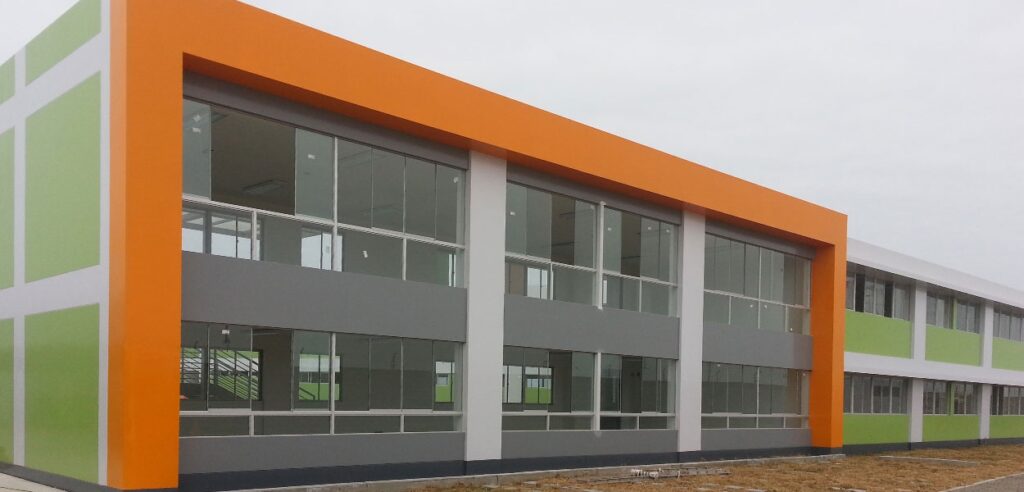
- Smart space design — Innova’s building model is standardized to a manual, allowing local architects to replicate it efficiently and at lower cost.
- Technology leverage — Digital learning tools reduce the reliance on expensive printed textbooks and allow content to be updated centrally and instantly across all campuses.
- Centralized data systems — Data dashboards allow school leaders across the network to monitor performance, identify gaps, and share solutions in real time.
As of 2019, Innova had established 54 schools and was planning to expand to 90, with ambitions to become the largest private school network in Latin America.
Innova School vs. Traditional Schools: Key Differences
| Feature | Traditional School | Innova School |
|---|---|---|
| Learning Model | Teacher-led, passive | Student-centered, active |
| Technology Use | Supplementary | Core and integrated |
| Classroom Design | Fixed rows, single-teacher | Flexible walls, collaborative pods |
| Curriculum | Textbook-driven | Project-based + digital |
| Teacher Role | Lecturer | Guide and facilitator |
| Assessment Focus | Tests and exams | Competency + project outcomes |
| Affordability | Varies | Designed for the middle class |
| Scale | Single campus | Network of 50+ campuses |
What Parents Should Know Before Enrolling Their Child in Innova School
If you’re a parent considering Innova School for your child, here’s a practical breakdown of what to expect:
The school day is structured differently. Your child will move between collaborative group activities and independent digital learning. If your child thrives in a structured, teacher-led environment, there may be an adjustment period.
Technology is central. Students regularly use digital tools for both instruction and homework. A basic level of home digital access — tablet or computer and internet — is helpful to maximize the flipped classroom components.
Projects, not just tests. Assessment at Innova is broader than standardized testing. Expect your child to be evaluated through project work, presentations, and collaborative outcomes in addition to traditional assessments.
Community and values matter. Innova places significant emphasis on character development and community contribution. Students are encouraged to take ownership not just of their grades, but of their role in society.
Results speak for themselves. The academic outcomes at Innova have been independently validated and are significantly above national averages across the countries where the schools operate.
Innova School Expansion: Peru, Colombia, and Mexico
Innova School began in Peru, where it was born out of urgent need. Peru ranked last among 65 countries in the PISA global education survey, and the gap between expensive private schools and underfunded public schools left most middle-class families with nowhere to turn.
After proving its model in Peru, Innova expanded to Colombia and Mexico. The Mosquera campus in Colombia, for example, serves 1,000 students and was adding 500 more students for the 2023/2024 school year. Visitors to these campuses report the same culture of innovation, high engagement, and strong academic performance that characterizes the original Peruvian schools.
Each Innova campus follows a standardized design model — built to a specific manual by local architects — which ensures consistent quality while adapting to local building costs and site conditions.
Criticism and Challenges: What the Critics Say
No educational model is without its critics, and Innova is no exception. Some educators and researchers have raised the following concerns:
Over-reliance on technology: Critics argue that heavy technology integration can create inequalities for students without reliable home internet access or supportive home environments for digital learning.
Scalability questions: While Innova has scaled impressively, some question whether the quality and culture of the original schools can be fully replicated across dozens of campuses in multiple countries.
Teacher retention: Like many innovative education systems, attracting and retaining highly skilled teachers who are comfortable with non-traditional methods can be a challenge, particularly in markets with teacher shortages.
Assessment depth: Some parents and educators prefer a more test-focused approach for university preparation, and wonder whether Innova’s project-based model fully prepares students for the highly competitive university entrance examinations in Latin American countries.
That said, Innova’s response to many of these criticisms has been its results data — students consistently outperforming national averages in standardized assessments despite the model’s limited focus on test preparation.
The Bigger Picture: Why Innova School Matters for Global Education
Innova School isn’t just a story about one school network in Peru. It’s a proof of concept for a global question: can high-quality education be designed, delivered, and scaled affordably?
The answer, based on Innova’s track record, is yes.
What Innova has demonstrated is that when you approach education the way IDEO approaches complex systems — by designing every element holistically, testing assumptions, building feedback loops, and centering the learner — the results can be dramatically better than what traditional schooling delivers.
This matters because access to quality education is one of the most powerful levers for economic mobility, social equity, and national development. Innova is not just educating students. It is showing the world that a different kind of school is possible — and that it can work at scale.
Frequently Asked Questions About Innova School
What is Innova School? Innova School is a network of affordable, high-quality private K–12 schools founded in Peru in 2011. It uses a blended learning model designed by IDEO and operates across Peru, Colombia, and Mexico.
Who founded Innova School? Innova School was founded by Carlos Rodriguez-Pastor, chairman of the Intercorp group, a Peruvian financial and retail conglomerate. He partnered with IDEO, a global design firm, to create the school system.
How much does Innova School cost? Tuition ranges from approximately $130 to $200 per month depending on location, making it significantly more affordable than traditional private schools of comparable quality in Latin America.
What is iBlended Learning at Innova? iBlended Learning is Innova’s core educational approach combining digital self-directed learning with collaborative, teacher-guided classroom experiences. It allows students to learn at their own pace online while benefiting from real-world collaboration and project-based learning in school.
How do Innova School students perform academically? Innova students consistently outperform national averages. In 2013, Innova second graders scored 61% proficiency in math versus Peru’s national average of 17%. In 2021/2022, students scored 45% higher than the average public and private school student on year-end standardized tests.
Is Innova School in the United States? As of now, Innova School primarily operates in Latin America — Peru, Colombia, and Mexico. However, its model and results have attracted significant attention from education researchers and policymakers worldwide, including in the United States.
What grades does Innova School cover? Innova School covers K–12 education, from kindergarten through the final year of secondary school.
What makes Innova School different from traditional schools? Innova is distinguished by its blended learning model, flexible classroom design, project-based curriculum, Innovation Program, and comprehensive teacher development system — all designed from the ground up rather than built on a traditional schooling template.