What Is Distance Learning
Distance learning has quietly become one of the most significant shifts in modern education. It is no longer a backup plan or a last resort — it is a full-fledged way of learning that millions of students around the world have embraced. From high schoolers finishing their diplomas online to working adults earning graduate degrees from their living rooms, the landscape of education has permanently expanded beyond classroom walls.
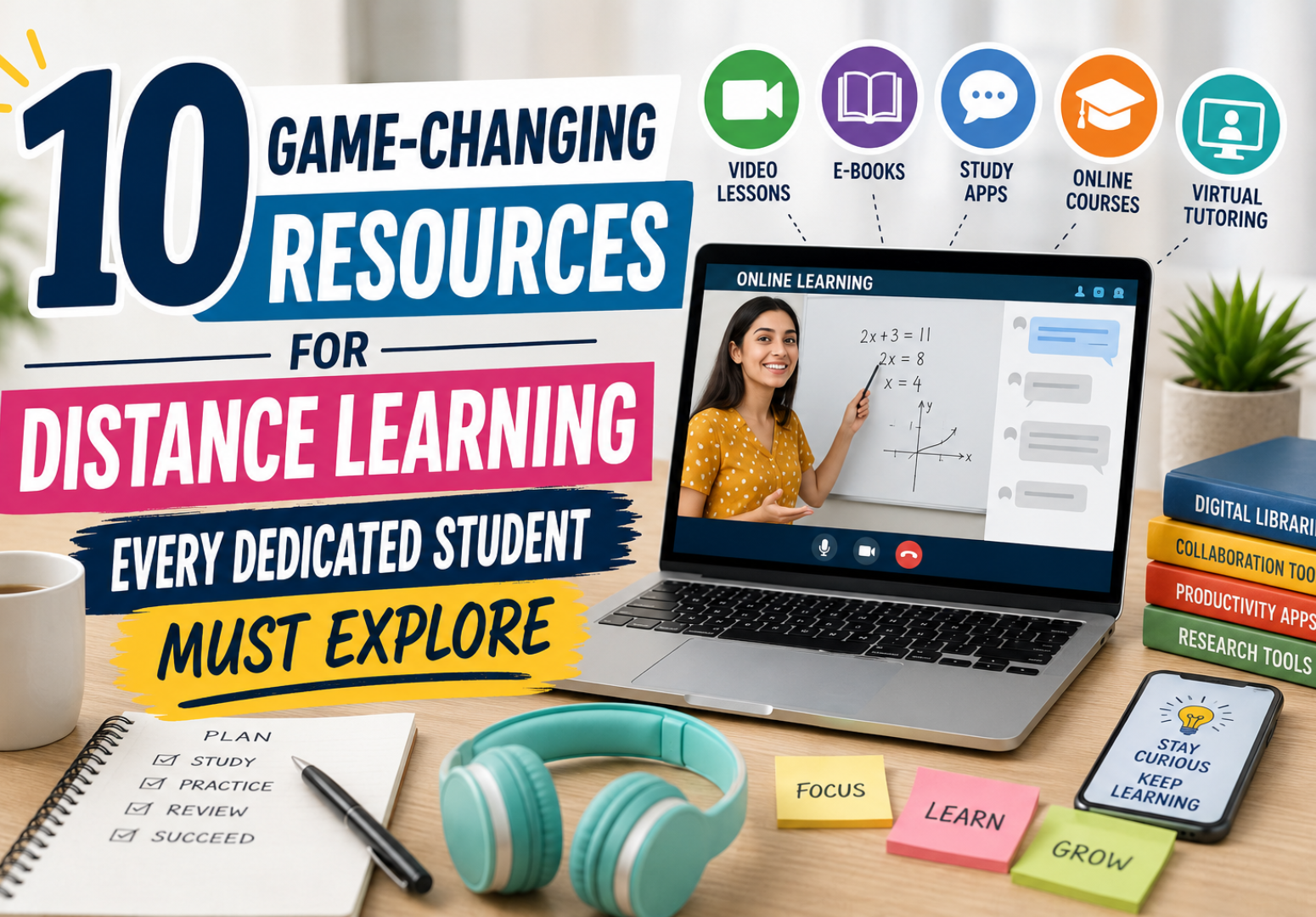
What makes this shift exciting is the sheer variety of resources for distance learning now available. A decade ago, your options were limited. Today, you can access live lectures, downloadable study materials, peer discussion forums, AI-powered tutors, and virtual labs — all from a single device. The challenge is no longer finding something to learn from. The real challenge is figuring out which tools are actually worth your time.
Online Learning Platforms Worth Using
When people think about resources for distance learning, online learning platforms are usually the first thing that comes to mind — and for good reason. Platforms like Coursera, edX, Khan Academy, and Udemy have built massive libraries of courses that cover everything from coding and data science to history and creative writing. Many of these courses are free or available at a low cost, which makes them accessible to students across different economic backgrounds.
Coursera alone partners with over 300 universities and companies worldwide, offering more than 7,000 courses. Khan Academy remains one of the most trusted free platforms for K-12 students, providing structured lessons with built-in practice exercises and instant feedback. For students who learn better through watching and doing rather than reading, these platforms offer a genuinely effective alternative to traditional classroom instruction. If you are looking for structured student learning tools, check out this guide on mastery connect student for more practical ideas.
Video Conferencing Tools for Students
Live connection matters in distance learning. Without it, the experience can feel isolating and one-dimensional. Video conferencing tools like Zoom, Google Meet, and Microsoft Teams have become essential resources for distance learning because they replicate the real-time interaction of a physical classroom. Students can ask questions, participate in group discussions, and collaborate on projects — all without being in the same room.
Zoom in particular has seen explosive adoption in educational settings, with reports showing over 300 million daily meeting participants at its peak. What makes these tools especially useful is their added features: breakout rooms for small group work, screen sharing for presentations, whiteboards for brainstorming, and recording options so students can revisit sessions later. When used well, a video call can feel surprisingly close to sitting in a real classroom with your peers.
Digital Libraries and Research Tools
Access to quality reading material is a cornerstone of any serious education. For distance learners, digital libraries fill that role completely. Platforms like Project Gutenberg, Open Library, and Google Scholar give students access to millions of books, academic papers, and research articles — many of them entirely free. These are not obscure or low-quality sources either. Google Scholar alone indexes hundreds of millions of scholarly documents.
Resources for distance learning are most powerful when they support deep, independent research. University students in particular benefit from tools like JSTOR, PubMed, and ResearchGate, which provide access to peer-reviewed journals across every academic discipline. Many public libraries also offer free digital borrowing through apps like Libby and OverDrive, which means students can borrow actual e-books and audiobooks without spending a single rupee or dollar.
Productivity Apps That Keep You Focused
Studying from home sounds great until you realize your phone is right there, your bed is calling your name, and nobody is watching. Productivity is one of the biggest challenges for distance learners, and the right apps can make a significant difference. Tools like Notion, Todoist, and Trello help students organize their tasks, set deadlines, and build study schedules that actually hold up through the week.
The Pomodoro Technique — working in focused 25-minute blocks with short breaks — is a method many distance learners swear by, and there are dedicated apps like Forest and Focus Keeper built around it. Google Calendar is simple but powerful for blocking out study time and setting reminders for assignment due dates. The goal with productivity tools is not to add more complexity to your day. It is to reduce decision fatigue so you spend your energy actually learning instead of figuring out what to do next.
Interactive Learning Websites for All Levels
Some students learn best by doing, not just watching or reading. Interactive learning websites address that need directly. Platforms like Quizlet, Kahoot, Brainscape, and Gimkit turn studying into something closer to a game. Flashcards, quizzes, timed challenges, and live competitions keep students engaged in ways that passive content simply cannot match.
According to the National Center for Education Statistics, student engagement is one of the strongest predictors of academic success in online learning environments. Interactive tools directly support that engagement by requiring active participation rather than passive consumption. Quizlet, for example, has over 500 million study sets created by students and teachers worldwide, covering virtually every subject imaginable. Whether you are preparing for a standardized test or reviewing weekly vocabulary, there is almost certainly an interactive resource already built for exactly what you need.
YouTube Channels for Self-Study
YouTube is wildly underrated as one of the most powerful resources for distance learning. The platform hosts thousands of educational channels run by genuine experts — professors, engineers, doctors, historians, scientists, and experienced teachers who share their knowledge completely for free. Channels like CrashCourse, TED-Ed, Professor Leonard, and 3Blue1Brown have helped millions of students grasp difficult concepts that textbooks failed to explain clearly.
What makes YouTube particularly valuable is its flexibility. You can pause, rewind, speed up, and replay explanations as many times as you need. A student struggling with calculus can watch the same problem solved three different ways by three different teachers until it finally clicks. A language learner can immerse themselves in native speaker content for hours without any additional cost. The key is being intentional — using YouTube as a study tool rather than letting it pull you into a six-hour rabbit hole of unrelated videos.
Virtual Study Groups and Communities
One thing traditional classrooms offer that distance learning sometimes lacks is spontaneous human connection. Study groups, hallway conversations, and the quiet pressure of studying alongside others all contribute to motivation and accountability. Virtual study communities try to recreate that energy online. Platforms like Discord, Reddit study servers, and Facebook study groups have become surprisingly effective gathering places for distance learners.
Resources for distance learning work best when they include a social layer. Studying alone is efficient, but studying with others pushes you to explain concepts out loud, debate ideas, and stay accountable to a shared schedule. Discord servers organized around specific subjects — math, programming, medicine, law — are particularly active and often include channels where members share notes, ask questions, and work through problems together. These communities exist for almost every academic subject and professional certification you can think of.
Time Management Strategies for Online Learners
No list of resources for distance learning is complete without addressing time management. Online learning gives you freedom, but freedom without structure is just chaos with a flexible schedule. The most successful distance learners treat their study time like a job — they show up at the same time each day, follow a plan, and protect their focus blocks from interruption.
One practical approach is time blocking, where you assign specific tasks to specific time slots rather than working from a vague to-do list. Another is the two-minute rule: if something takes less than two minutes, do it immediately instead of adding it to a list. Weekly reviews, where you spend 15 minutes every Sunday previewing the week ahead, help you stay ahead of deadlines instead of reacting to them at the last minute. These are not complicated strategies. They are simple habits that compound into significantly better academic performance over time.
E-Books and Open resources for distance learning
Textbooks are expensive. A single university textbook can cost over $300, which is a serious barrier for many students. Open Educational Resources (OER) solve that problem by providing free, openly licensed educational materials that anyone can access, use, and adapt. Platforms like OpenStax, MIT OpenCourseWare, and OER Commons offer full textbooks, lecture notes, syllabi, and assignments — completely free of charge.
Resources for distance learning that reduce financial barriers are especially important for students in developing countries or lower-income households. OpenStax alone has saved students over $1.5 billion in textbook costs since its founding. MIT OpenCourseWare publishes materials from over 2,400 MIT courses, giving any motivated student in the world access to an Ivy League curriculum. These platforms do not offer certificates or formal enrollment, but for anyone who wants to learn deeply and independently, they are genuinely remarkable.
Note-Taking Apps and Digital Organization
Taking good notes is a skill, and the tools you use matter more than most students realize. In a traditional classroom, you might scribble in a notebook. In a distance learning setup, digital note-taking apps give you far more flexibility. Apps like Notion, Evernote, OneNote, and Obsidian allow students to organize notes by subject, tag key concepts, embed images and links, and search through everything instantly.
Obsidian in particular has become popular among serious learners because it supports a networked note-taking approach — where ideas link to each other like a personal knowledge database. This method, sometimes called a second brain, helps students see connections between concepts across different subjects. For students juggling multiple courses simultaneously, having a single organized digital workspace can reduce the mental load significantly and make review sessions far more efficient.
Podcasts as Learning Resources
Podcasts are a genuinely underused resource in the distance learning world. They are perfect for commutes, exercise sessions, or any moment when your hands are busy but your mind is free. Educational podcasts like Stuff You Should Know, The History of Rome, Radiolab, and Science Vs cover academic subjects in conversational formats that feel nothing like studying but teach you a surprising amount.
For professional learners, podcasts offer an efficient way to stay current in fast-moving fields. Marketing professionals listen to Marketing School. Developers tune in to Syntax or Software Engineering Daily. Medical students use podcasts to supplement their reading with case discussions and clinical reasoning exercises. Resources for distance learning do not always have to be screen-based, and podcasts are proof that serious learning can happen while you are washing dishes or walking your dog.
Language Learning Tools Online
Language learning has exploded online, and the tools available today are dramatically better than anything that existed even ten years ago. Apps like Duolingo, Babbel, Pimsleur, and Anki have made it possible to learn a new language at your own pace with scientifically backed spaced repetition methods. Duolingo alone has over 500 million registered users, making it one of the most widely used educational apps in the world.
Beyond apps, platforms like iTalki and Preply connect language learners with native speaker tutors for one-on-one live sessions at affordable rates. YouTube channels in target languages, foreign language Netflix shows with subtitles, and online conversation exchange communities add real-world context that textbook drills cannot provide. For students studying abroad programs, professional certifications that require language proficiency, or simply personal growth, online language tools are among the most accessible and effective resources for distance learning available today.
Assessment and Feedback Tools
Learning without feedback is guessing. One of the real challenges of distance learning is that students often do not know if they actually understood something until an exam reveals otherwise. Assessment tools address this gap by providing ongoing, low-stakes checkpoints throughout the learning process. Platforms like Google Forms, Formative, Socrative, and Nearpod let teachers build quizzes and interactive activities that give students immediate feedback on their understanding.
For self-directed learners, tools like Anki use spaced repetition algorithms to identify exactly which concepts you are weak on and serve those cards more frequently until you genuinely know them. Practice test platforms like Exam topics, UWorld, and Magoosh provide full-length simulated exams for standardized tests and professional certifications. The combination of frequent self-assessment and targeted review is one of the most evidence-based approaches to effective learning that exists.
Accessibility Features in Online Learning
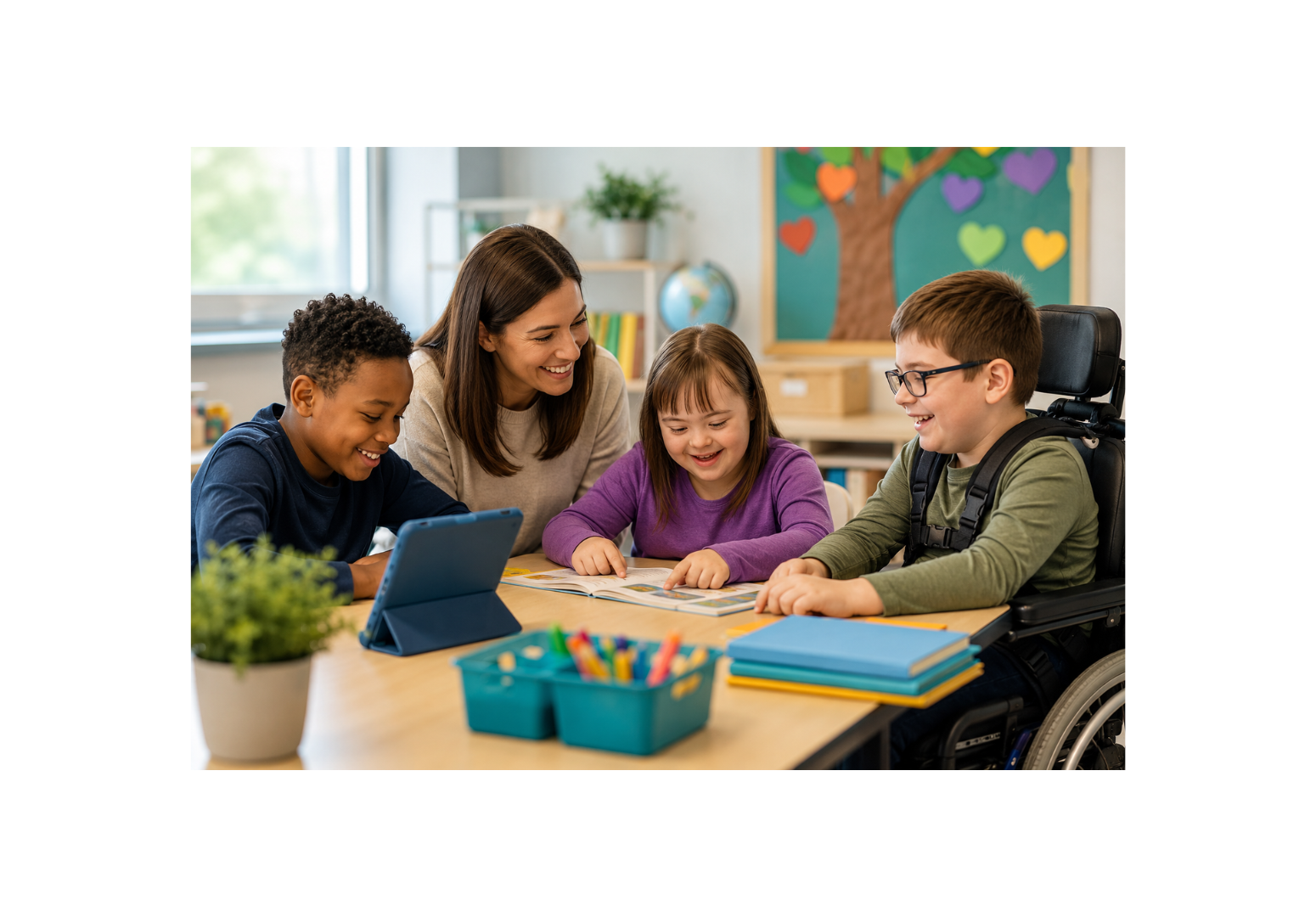
Not every student learns the same way, and resources for distance learning need to reflect that reality. Accessibility features — closed captions, screen readers, adjustable text sizes, color contrast settings, and audio descriptions — make online education more inclusive for students with visual impairments, hearing differences, learning disabilities, or attention challenges. Most major platforms now build accessibility into their core design, but it is worth knowing what to look for.
Tools like Otter.ai and Microsoft Transcribe provide automatic real-time transcription for live lectures, which benefits students who are deaf or hard of hearing as well as students who simply absorb written content better than audio. Text-to-speech tools like Natural Reader allow students with dyslexia or reading difficulties to listen to their study materials instead of struggling through dense paragraphs. Inclusive design in distance learning is not just good ethics — it is good education for everyone.
Staying Motivated While Learning Remotely
Motivation is the invisible resource that makes all the others work. You can have the best tools, the fastest internet, and the most comprehensive course library in the world — but if you lose motivation two weeks in, none of it matters. Distance learners face unique motivation challenges: no peer pressure, no teacher accountability, no physical environment that signals it is time to study.
What actually works, according to most educational psychologists, is connecting your daily study habits to a meaningful long-term goal. Write it down. Read it every morning. Break that goal into smaller weekly milestones so progress feels visible and real. Resources for distance learning are most effective when paired with a clear personal reason for showing up. Community helps too — whether that is a study partner, an online forum, or a mentor who checks in on your progress. Motivation is not something you either have or you do not. It is something you build deliberately, one small habit at a time.
Frequently Asked Questions about resources for distance learning
What are the best free resources for distance learning?
Some of the best free options include Khan Academy for K-12 subjects, Coursera’s audit feature for university-level courses, MIT OpenCourseWare for academic materials, YouTube educational channels, and Google Scholar for research papers. Most of these platforms require nothing more than an email address to get started.
How do I stay focused while studying from home with resources for distance learning?
Create a dedicated study space, set a fixed daily schedule, use productivity apps like Notion or Todoist, and try the Pomodoro Technique. Removing your phone from the room during study blocks makes a bigger difference than most people expect.
Are resources for distance learning effective for professional certifications?
Absolutely. Platforms like Coursera, Udemy, LinkedIn Learning, and official vendor training sites offer structured preparation for professional certifications in IT, project management, data science, healthcare, and many other fields. Many learners have passed difficult certifications entirely through self-study using online resources.
Can online learning tools replace traditional classroom education?
For many students and subjects, online tools can deliver equivalent or even better outcomes when used with discipline and intention. However, hands-on fields like surgery, skilled trades, or laboratory science still require some physical environment that distance learning alone cannot replicate. The best approach often combines both.
Conclusion about resources for distance learning
Distance learning is not a lesser version of real education. When approached seriously and supported by the right tools, it is a genuinely powerful way to build knowledge, earn credentials, and grow professionally — on your own schedule, from anywhere in the world. The resources for distance learning covered in this guide span every need: video platforms, digital libraries, productivity tools, interactive websites, podcasts, language apps, and more. Each one serves a different kind of learner and a different kind of goal.
The honest truth is that no single tool will do the work for you. What matters is choosing a few that fit your learning style, committing to a consistent routine, and showing up every day even when motivation is low. Resources for distance learning are only as powerful as the student who uses them. Start with two or three tools from this list, build your workflow around them, and expand from there. The learning environment of the future is already here — you just have to step into it with intention and stick with it long enough to see real results.