Introduction
Every Mastery Connect student today has access to one of the most effective academic tracking tools available in modern education. This platform was built with a clear purpose — to give students, teachers, and parents a transparent window into learning progress. Whether you are in middle school or high school, the way you use this platform directly affects your academic outcomes. Understanding its full range of features is no longer optional for serious learners; it is essential. This article walks through nine practical and proven ways to get the absolute most out of your experience on this platform, covering everything from daily habits to advanced assessment strategies that deliver real, measurable results.
What Is MasteryConnect Platform
Before diving into strategies, it helps to understand exactly what this platform is designed to do. At its core, MasteryConnect is a standards-based assessment and learning management tool used widely across K-12 schools in the United States. Teachers use it to assign assessments, track mastery of specific learning standards, and monitor class-wide performance trends over time.
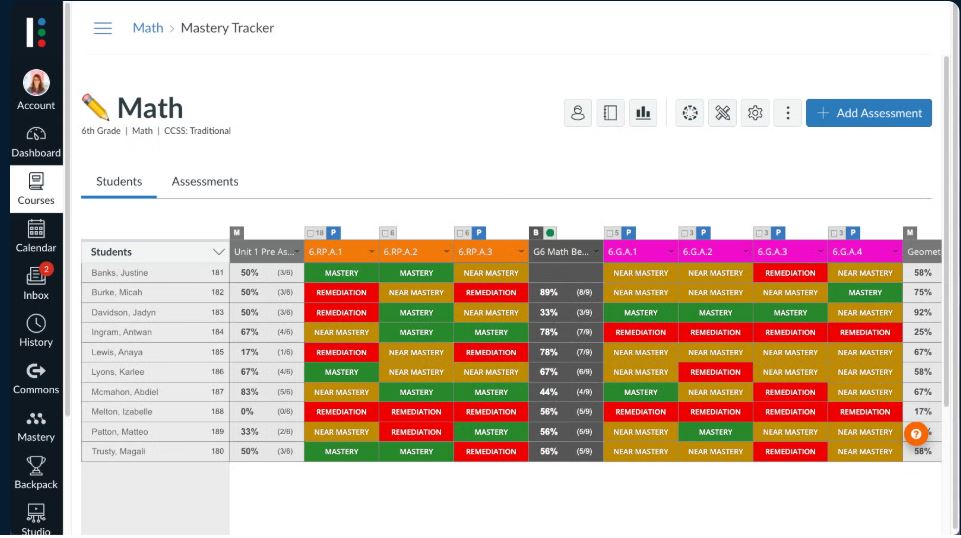
For the mastery connect student, the platform provides a personalized dashboard showing which standards have been mastered, which ones need more work, and which assessments are upcoming. This real-time feedback loop is one of the platform’s most valuable features because it removes the guesswork from learning. Instead of waiting until a report card arrives, students can see where they stand on any given day.
The system also connects teachers and students in a streamlined way, allowing for quicker feedback on assignments and assessments. This connection is particularly powerful in schools that use competency-based grading, where progress is measured by mastery of skills rather than simple test averages.
Checking Your Dashboard Regularly
One of the simplest yet most overlooked habits for any mastery connect student is consistently checking the personal dashboard. The dashboard is the nerve center of the entire experience, showing scores, mastery levels, and upcoming tasks all in one organized view. Students who ignore it for days at a time often miss important updates from teachers or fail to notice when a new assessment has been assigned.
Getting into the habit of logging in every school day takes no more than a few minutes but pays enormous dividends over a semester. When you know exactly where your mastery scores stand, you can prioritize your study sessions more effectively. Instead of studying everything at random, you can focus your limited time on the specific standards marked as approaching or not mastered yet.
Consistent dashboard use also helps reduce test anxiety. When students are regularly informed about their standing, there are no unpleasant surprises at grading time. The transparency the platform offers is only useful if students actually take time to engage with it on a regular basis.
Using Progress Trackers Effectively
Progress tracking is one of the most powerful features available to the mastery connect student, and using it strategically can transform how you approach your studies. Each standard in your course is tracked individually, meaning you can see granular data about exactly where your strengths and weaknesses lie rather than receiving one vague overall grade.
For more guidance on maximizing digital education tools like this, visit The Complete Guide to MasteryConnect Student for deeper insights into how modern platforms are reshaping personalized learning. Understanding how tracking connects with broader educational tools can give you a competitive edge in your academic journey.
When you notice a particular standard consistently showing low mastery, that is your cue to seek additional help immediately rather than hoping it resolves on its own. Talk to your teacher, watch supplementary videos, or practice with similar questions until that standard moves into the mastered category. Small, targeted efforts on individual standards are far more efficient than broad, unfocused study sessions.
Preparing for MasteryConnect Assessments
Assessment preparation looks different on this platform compared to traditional testing environments. A mastery connect student who prepares well knows that each assessment is tied to one or more specific learning standards, which means studying the right material is far more straightforward than preparing for a generic exam. You are not trying to memorize everything — you are trying to demonstrate mastery of defined skills.
Start preparation at least three days before any scheduled assessment. Review your class notes, identify which standards will be covered, and look at any previous attempts on related assessments to spot recurring mistakes. Many students make the error of reviewing only once, but spaced repetition — reviewing material on multiple separate days — produces much stronger retention and better assessment performance.
Also pay attention to the format of the assessment. Some are multiple choice, others are short answer or performance-based. Knowing the format ahead of time allows you to practice in ways that match how you will actually be tested. A student who practices writing explanations for a performance task will outperform someone who only reads notes passively.
Understanding Your Mastery Scores
Mastery Connect student on this platform are not simply pass or fail markers — they represent a spectrum of learning that every mastery connect student should learn to interpret correctly. Most schools using this system divide mastery into four levels: Not Mastered, Approaching Mastery, Mastered, and Advanced. Each level tells you something meaningful about where you are in the learning process.
A score in the Approaching Mastery range is actually a positive signal. It means you have a foundation and just need additional practice to cross into full mastery. Students who treat approaching scores as failures often disengage, when in reality they are close to the goal and just need one more targeted push. Understanding this nuance changes your emotional response to the scores entirely.
Advanced scores, on the other hand, should not lead to complacency. Even if you have mastered a standard, periodic review helps you retain that knowledge for cumulative assessments and standardized testing. The platform data is most valuable when students treat it as a living record to be tended, not a final verdict on their ability.
Communicating With Your Teacher
The mastery connect student who communicates proactively with their teacher gains a significant advantage over peers who stay silent and hope for the best. Because this platform gives teachers detailed data about each student’s progress, they are often already aware when someone is struggling. But teachers appreciate students who take the initiative to ask for help rather than waiting to be approached.
According to research published by the National Education Association, student engagement and proactive communication with educators are among the strongest predictors of academic success across all grade levels. When students use data from platforms like this to guide their conversations with teachers, those conversations become far more productive and targeted.
Use your dashboard data as a conversation starter. Instead of saying “I don’t understand the class,” say “I can see my mastery score for standard 4.3 is in the Approaching range — can we review that concept together?” That kind of specific, data-driven communication gets faster, more useful help and demonstrates to your teacher that you are engaged and self-aware as a learner.
Setting Weekly Learning Goals
Goal setting is a habit that separates high-performing students from average ones, and the mastery connect student is in a uniquely powerful position because the platform provides all the data needed to set smart, measurable goals every week. Rather than setting vague goals like “study more,” you can set specific targets tied to your actual mastery data.
A practical weekly goal might look like this: move two Approaching standards into Mastered by Friday, complete all assigned assessments before their due dates, and review one previously mastered standard to keep retention strong. These goals are specific, achievable within a week, and directly tied to data you can see on your dashboard every day.
Writing goals down increases the likelihood of achieving them dramatically. Keep a simple notebook or digital document where you record your goals each Monday and check in on them by Thursday. This brief habit creates accountability and gives you a rhythm that keeps learning consistent rather than frantic and last-minute.
Working With Study Groups
Collaborative learning is highly effective, and mastery connect student data can actually enhance how study groups function. Instead of gathering with friends and not knowing what to focus on, group members can compare their mastery dashboards and identify shared weak areas. When multiple people in a group are struggling with the same standard, that becomes the priority for the session.
Study groups also work well when members have complementary strengths. If one student has mastered a standard that another is still approaching, peer teaching becomes possible. Research consistently shows that teaching material to someone else deepens the teacher’s own understanding just as much as it helps the learner. This mutual reinforcement makes study groups genuinely powerful when organized around real data.
Keep study sessions time-limited and focused. Two hours with a clear agenda tied to specific standards is far more productive than four hours of scattered, unfocused reviewing. Start each session by reviewing individual dashboards, agree on the priority standards, divide the explanation responsibilities, and end with a practice quiz if possible.
Reviewing Past Assessment Data
One of the most underused features available to any mastery connect student is the ability to review past assessment data. Many students complete an assessment, receive their score, and move on without ever looking back at what they got wrong and why. This is a missed opportunity that costs points on future assessments.
When you review a past assessment, look specifically at the questions tied to standards where your mastery is lowest. Were the mistakes due to misreading the question, gaps in content knowledge, or careless errors under pressure? Each type of mistake requires a different correction strategy. Content gaps require more study; careless errors require slowing down and checking work; reading mistakes require practicing careful question analysis.
Patterns in your errors are the most valuable information available to you. If you consistently miss questions involving a specific type of reasoning or a particular topic, that pattern reveals exactly where your study time should go next. Students who use past data this way improve their scores far faster than those who rely on instinct alone.
Managing Test Anxiety Strategically
Test anxiety affects a surprisingly large number of students, and it can undermine even well-prepared learners on assessment day. The mastery connect student has an advantage here because the continuous visibility of progress data reduces the element of surprise that often triggers anxiety in the first place. When you know your standing, the stakes of any individual assessment feel lower.
Beyond using platform data to reduce uncertainty, physical and mental preparation before assessments makes a measurable difference. Getting adequate sleep the night before, eating a proper breakfast, and arriving to the assessment with a few minutes to settle in are simple steps that many students overlook in favor of last-minute cramming. None of those minutes of frantic reviewing will help as much as a calm, rested mind.
Breathing exercises and positive self-talk are not just feel-good advice — they are backed by research showing real physiological effects on focus and recall. Before beginning an assessment, take three slow, deep breaths and remind yourself that you have prepared and that your dashboard data confirms your growth. This brief ritual can shift you out of an anxious state and into a focused, performance-ready mindset.
Leveraging Teacher Feedback Loops
Feedback is only valuable when it is actually used, and the mastery connect student who acts quickly on teacher feedback gains compounding benefits over the course of a semester. When a teacher flags a specific weakness or leaves a comment on an assessment, that input represents professional judgment about exactly where your learning has a gap. Treating that feedback as optional is an expensive mistake.
Create a personal feedback log where you record teacher comments from assessments and note what action you took in response. This simple practice builds accountability and gives you a reference point when preparing for future assessments covering similar standards. Over time, you will notice that many of the same concepts appear repeatedly, and having a record of feedback on those concepts accelerates your mastery.
Teachers also appreciate students who respond visibly to feedback. When a teacher sees that a student’s mastery score improved on a standard they previously flagged, it builds a positive relationship and often leads to more personalized guidance going forward. The feedback loop on this platform is designed to be a dialogue, not a monologue.
Parents Supporting Student Progress
Parents play a meaningful role in the success of any mastery connect student, particularly at the middle school level where students are still developing independent study habits. The platform is designed with parent visibility in mind, allowing guardians to monitor their child’s mastery progress and assessment schedule alongside the student.
Parents who engage regularly with the platform data can have much more productive conversations at home about school performance. Instead of asking “how was school today?” and receiving a vague answer, a parent can ask “I noticed your mastery score for that math standard dropped this week — what happened there?” That kind of specific, informed question opens dialogue and signals that the parent is genuinely engaged in the academic process.
However, it is important for parents to use this access supportively rather than critically. Students whose parents use platform data to pressure or punish them often disengage from the platform entirely, defeating its purpose. The goal is collaborative support, not surveillance. Regular, calm check-ins using the data as a shared reference point work far better than reactive conversations triggered by score drops.
Balancing Platform Use Wisely
While the platform is a powerful tool, the mastery connect student also needs to know how to balance screen time on the platform with other forms of learning. Spending excessive time analyzing dashboard data without actually studying the underlying material produces no improvement. The data is meant to direct your effort, not consume it.
Establish a routine where you check your dashboard briefly at the start and end of each study session — perhaps five minutes at the beginning to identify priorities and five minutes at the end to record your progress. The time between those bookends should be spent actually learning, practicing, and reviewing content. This balance keeps the platform useful without turning it into a distraction.
Also remember that not all learning happens on a screen. Reading textbooks, writing by hand, discussing concepts aloud, and working through problems on paper all contribute to robust understanding. Use the platform as your compass and data source, but let varied learning methods be the actual vehicle of mastery.
Staying Consistent All Semester
Consistency is arguably the single most important factor in long-term academic success for any mastery connect student. The platform is designed around continuous progress, not last-minute cramming. Students who engage with it regularly from the first week of the semester are in a fundamentally different position by finals time compared to those who only pay attention when grades are already suffering.
Build consistency by attaching platform check-ins to existing habits. Review your dashboard immediately after logging into your school computer each morning, or check it right after dinner as part of a homework routine. Habits that attach to existing anchors are far easier to sustain than those that exist in isolation with no reliable trigger.
Semester-long consistency also means keeping your momentum during easier weeks, not just during stressful assessment periods. The students who maintain steady engagement when things are going well are the ones who have built enough of a mastery buffer to handle the inevitably harder weeks without falling behind.
Avoiding Common Mastery Connect student Mistakes
Several common mistakes consistently hold back the mastery connect student from achieving their full potential on this platform. The first and most common is treating assessments as one-time events rather than part of an ongoing cycle. Every assessment result should inform what you do next — not be filed away and forgotten.
Another frequent mistake is focusing only on mastery percentages while ignoring the standard-by-standard breakdown. A student with a 75% mastery average might have four standards at 100% and three standards still at 20%. Those low-scoring standards will likely reappear on cumulative assessments and standardized tests, so ignoring them in favor of celebrating the overall average is a strategic error with real consequences.
Finally, many students underestimate the value of the platform’s historical data. Over multiple years, your mastery history can reveal learning patterns that inform how you approach new subjects. A student who recognizes they consistently struggle with inferencing questions across subjects can seek targeted practice in that skill specifically, rather than waiting for it to show up as a weak point on yet another assessment.
Building Long-Term Study Habits
The most lasting benefit of being a mastery connect student is not any individual assessment score — it is the development of data-driven study habits that will serve you well beyond this platform and well beyond your current school year. Learning to use performance data to direct your effort is a skill that applies to college coursework, professional certifications, and any context where self-directed learning is required.
Students who graduate from high school having used this platform consistently often report that they feel more confident in their ability to assess their own knowledge gaps and address them independently. That metacognitive skill — knowing what you know and knowing what you do not know — is among the most valuable intellectual tools a person can possess.
Start building these habits deliberately rather than accidentally. Treat your time on this platform as training for lifelong self-directed learning, not just a tool for surviving the current school year. The students who bring that mindset to the platform are the ones who walk away with the deepest and most transferable benefits.
Conclusion of Mastery Connect student
The journey of every mastery connect student is ultimately about more than completing assessments and earning scores. It is about developing a relationship with your own learning data that empowers you to grow consistently and strategically over time. The nine approaches covered in this article — from checking your dashboard daily to building long-term data-driven habits — represent a complete framework for academic success on this platform.
No single strategy works in isolation. The mastery connect student who combines regular dashboard engagement, proactive teacher communication, smart goal setting, and consistent review habits will outperform peers who rely on effort alone without direction. This platform gives you the data — your job is to use it wisely and act on it every single week.
The tools are already in your hands. The platform is ready. Now the only remaining question is whether you will engage with it deeply enough to unlock everything it can do for your academic growth and your future.
FAQs about Mastery Connect student
What can a mastery connect student see on their dashboard?
A mastery connect student can view their mastery levels for each learning standard, upcoming assessments, past scores, and teacher feedback all in one centralized dashboard view.
How often should a mastery connect student check the platform?
Ideally, a mastery connect student should log in and review their dashboard every school day to stay updated on new assignments, score changes, and standard progress.
Can a mastery connect student improve a low mastery score?
Yes. Scores are not permanent. By reviewing weak standards, seeking teacher support, and completing additional practice, a mastery connect student can raise their mastery level on any standard over time.
Is the platform accessible to parents of a mastery connect student?
Most school implementations allow parents to view their child’s progress data alongside the student, which supports better academic conversations at home.How does a mastery connect student use the platform for test preparation?
By identifying which standards will appear on an upcoming assessment and reviewing past performance data on those specific standards, a mastery connect student can prepare more efficiently than using generic study methods.