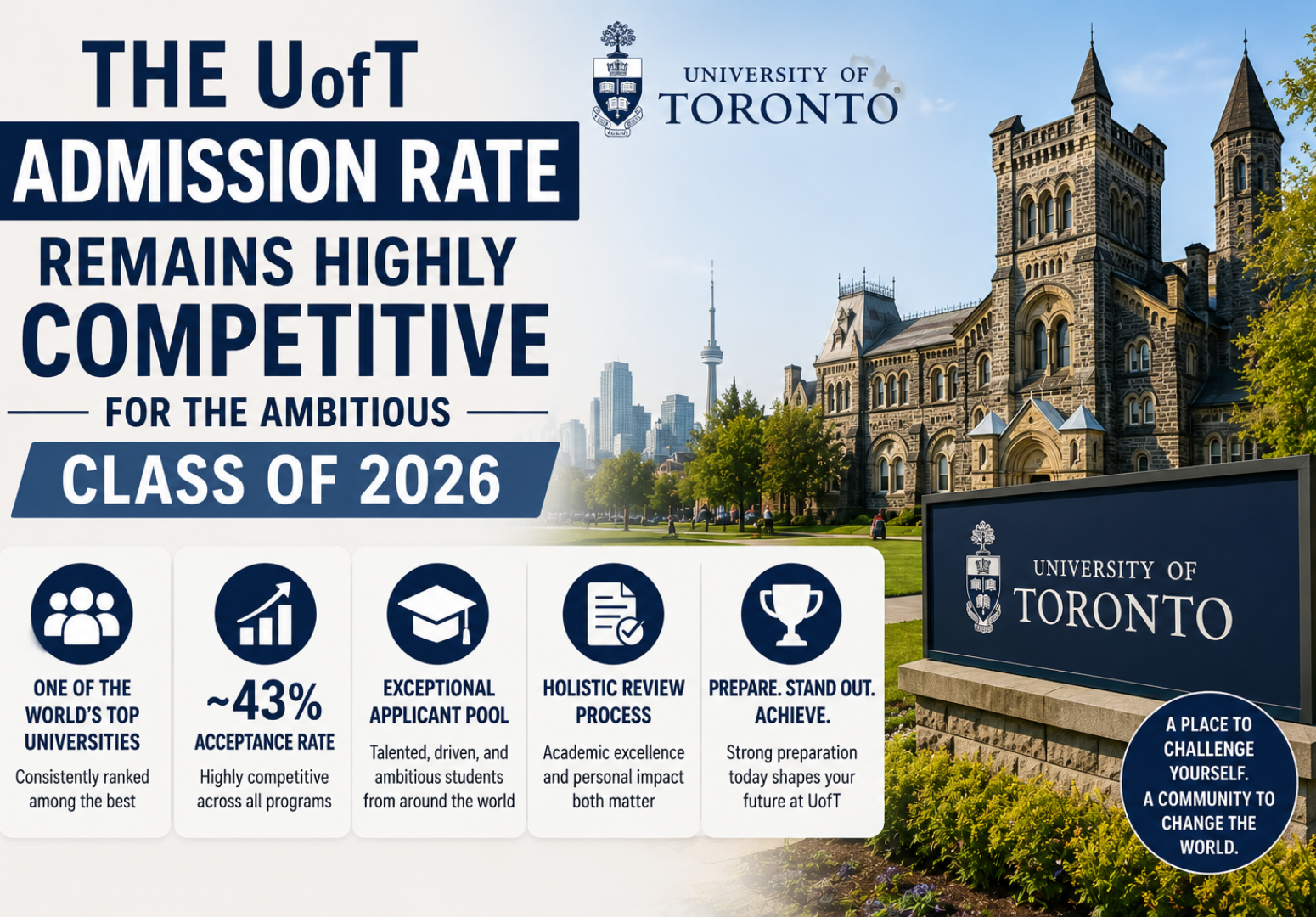
Understanding UofT Admission Rate
The University of Toronto stands as one of Canada’s most prestigious institutions, attracting thousands of applicants annually. Understanding the UofT admission rate is crucial for anyone considering applying. The UofT admission rate has become increasingly selective over the past decade, with competition reaching new heights. Students aspiring to attend this world-class institution need to understand just how competitive the UofT-admission rate truly is. This article breaks down everything you need to know about the UofT admission rate, from statistics to program-specific details, helping you prepare a strong application.
The university’s reputation makes it one of the most sought-after universities globally. The UofT admission rate varies significantly depending on the program you’re interested in. Overall, the university accepts fewer students each year, making the UofT admission rate highly competitive across most programs. The institution receives over 95,000 applications annually from domestic and international candidates, yet only a small percentage gain admission. This intense competition reflects the quality and prestige associated with getting into the university. Assistant Professor Career Path and Salary Guide explains how pursuing a degree here can lead to advanced academic careers, which is why so many students chase this opportunity.
Recent Admission Statistics Details
Looking at recent data, the UofT admission rate tells a compelling story about changing educational demographics. The 2023 cohort saw approximately 5% of domestic applicants gain admission, while the UofT-admission rate for international students sat closer to 2-3%. These percentages represent thousands of highly qualified candidates competing for limited spots. When you break down the UofT admission rate by faculty, the numbers become even more telling about program popularity and selectivity. Engineering programs typically have lower acceptance rates compared to humanities-based faculties, reflecting both the difficulty of the program and student demand.
Year-over-year trends in the UofT admission rate show consistent tightening of standards. This isn’t just about having good grades—the university increasingly values well-rounded applicants who demonstrate leadership, community service, and academic passion. The UofT admission rate statistics reveal that students getting in typically have extremely high GPAs, often above 3.9, along with strong standardized test scores. However, the university explicitly states that the UofT admission rate reflects just one metric of success. Many admitted students excel in areas beyond academics, including sports, arts, research, and community involvement.
Competitive Programs and Their Acceptance
Different faculties within the university have wildly different selectivity rates, making the UofT admission rate conversation more nuanced than a single number. The most competitive programs typically show the lowest UofT-admission rate among all options. Medicine and dentistry programs are notoriously difficult to enter, with acceptance rates below 2%. These ultra-competitive programs require not just exceptional academics but also demonstrated commitment to healthcare and relevant experience. The UofT admission rate for these programs reflects the prestige and career prospects graduates enjoy.
Commerce, engineering, and life sciences also maintain highly selective UofT admission rate thresholds. Students applying to these programs should expect average admitted class profiles that include near-perfect GPAs and top-tier standardized test performance. The UofT admission rate for engineering specifically has dropped over the years as engineering education gained prominence globally. It’s worth noting that while the UofT-admission rate varies by program, all applicants face rigorous evaluation processes. Your choice of program significantly impacts your chances of success given the varying UofT admission rate across different faculties.
Engineering Program Admission Requirements Here
Engineering at the University of Toronto ranks among the country’s most selective programs, reflected in the UofT admission rate for this faculty. To qualify, you typically need a minimum 95% average in prerequisite courses, though competitive candidates often exceed 97%. The UofT admission rate for engineering hovers around 3-4%, making it tougher than many professional programs elsewhere. Beyond grades, the engineering application requires strong performance in physics and mathematics courses. Students must demonstrate sustained excellence in STEM subjects throughout their high school career or equivalent.
The UofT admission rate for engineering also considers supplementary application materials including engineering-specific essays. These essays ask applicants to explain why they’re interested in engineering and what specific area excites them. The university wants to see genuine passion for solving problems and designing solutions. Demonstrating knowledge of current engineering challenges and innovations strengthens your response. The increasingly stringent UofT admission rate for engineering reflects the program’s reputation for producing innovative engineers who advance technology and infrastructure globally.
Commerce Program Acceptance Standards Today
The Rotman Commerce program maintains its own rigorous standards alongside the overall UofT admission rate expectations. Commerce applicants typically need average GPAs around 93-95%, comparable to or slightly lower than engineering. The UofT admission rate for commerce sits around 4-5%, giving it slightly better odds than engineering but still extraordinarily selective. Commerce admissions evaluate both quantitative skills and business potential, looking for future leaders and entrepreneurs. Strong performance in mathematics and economics courses strengthens commerce applications. The UofT admission rate for commerce has been rising as business education gains global prominence.
Rotman Commerce particularly emphasizes supplementary applications and video submissions as part of the UofT admission rate evaluation process. These components allow admissions officers to assess communication skills, business mindset, and personal qualities beyond what grades reveal. Students should prepare thoughtful responses about their interest in commerce and their vision for future careers. The UofT admission rate for this program rewards applicants who articulate clear business aspirations and demonstrate understanding of contemporary business issues. Leadership experience, business competitions, and entrepreneurial initiatives significantly boost application strength for this UofT admission rate consideration.
Life Sciences Admission Rates Overview
Life sciences programs at the University of Toronto present another variation of the UofT admission rate landscape. These programs attract pre-med students, research-focused academics, and biology enthusiasts, creating intense competition. The UofT admission rate for life sciences typically ranges from 4-6%, depending on the specific program and year. Biological sciences, cellular and molecular biology, and immunology each have slightly different UofT admission rate thresholds. These programs emphasize strong performance in biology, chemistry, and mathematics courses during high school. The UofT admission rate for life sciences programs typically requires minimum 92-95% averages.
Research potential becomes increasingly important in life sciences applications, reflected in how the UofT admission rate evaluation weighs this factor. Students demonstrating laboratory experience, summer research internships, or independent projects gain significant advantages. The UofT admission rate for life sciences considers demonstrated curiosity about scientific questions and commitment to advancing biological knowledge. Students should highlight any research presentations, publications, or significant projects in their applications. The university values applicants who can articulate genuine interest in their chosen life science specialty, which influences the UofT admission rate outcomes substantially.
International Student Admission Considerations Now
The UofT admission rate for international students tells a very different story compared to domestic applicant statistics. International students face tougher competition, with the UofT admission rate for international applicants often 1-2% across most programs. This dramatic difference reflects limited international spots and the prestige that attracts global talent. International applicants must demonstrate English language proficiency through TOEFL or IELTS scores unless they studied in English-medium schools. The UofT admission rate for international applicants requires slightly higher academic credentials than domestic students. This practice reflects the university’s desire to maintain consistent quality while managing international enrollment targets.
The UofT admission rate for international students also depends on country quotas and geographic diversity considerations. The university aims to build diverse student cohorts from various countries. Financial considerations impact international admission decisions, as the UofT admission rate reflects available funding and scholarship allocations. International applicants should research financial aid opportunities before applying. The UofT admission rate evaluation for international students includes assessment of how candidates will contribute to campus diversity and cross-cultural understanding. Strong performance on standardized tests like the SAT or ACT strengthens international applications given the UofT admission rate selectivity.
GPA and Test Score Requirements
Academic credentials form the foundation of UofT admission rate consideration, though they’re not solely determinative. Domestic students should target minimum GPAs around 93-96% depending on their program choice. The UofT admission rate reflects university standards that typically require sustained high performance across all subjects. While English and mathematics matter most, universities evaluate overall academic consistency. Students with uneven GPAs face steeper challenges, even if their overall average meets minimum thresholds. The UofT admission rate evaluation includes reviewing course progression and upward trends in grades.
Standardized tests significantly influence the UofT admission rate outcomes for many applicants, particularly international students. SAT or ACT scores strengthen applications, though they’re not mandatory for domestic Canadian applicants. Strong standardized test performance can offset slightly lower GPAs in competitive pools. The UofT admission rate benefits applicants scoring above the 90th percentile on these standardized tests. AP or IB exam performance demonstrates advanced academic engagement and depth of knowledge. Advanced placement credits can benefit admitted students, though these don’t directly influence the UofT admission rate calculation. Recent reported information from the College Board research database indicates that standardized testing remains important for competitive institutions like University of Toronto.
Application Timeline and Submission Deadlines
Timing matters considerably when navigating the UofT admission rate application process. Application submissions typically open in September and close on January 15th for most programs. Missing this deadline eliminates your chance regardless of how you might have performed in the UofT admission rate calculation. Early submission can provide advantages as some programs have rolling admissions decisions that influence the UofT admission rate spots filled. Students should prepare applications well in advance to avoid technical difficulties or missed deadlines. The UofT admission rate evaluation continues beyond initial submission as universities review supplementary materials.
Understanding critical dates helps optimize your application timeline relative to the UofT admission rate process. Interview invitations typically arrive between January and March for programs that interview. Final admission decisions usually arrive by April for domestic students. Early knowledge of your UofT admission rate status allows time for backup plans if needed. Students applying early gain psychological advantages from knowing their status sooner. The UofT admission rate process extends over several months, requiring patience and strategic communication with the university throughout. Monitoring your application portal regularly ensures you don’t miss important notifications or requests for additional information.
Essay and Personal Statement Importance
Essays significantly influence UofT admission rate outcomes, offering windows into applicant personalities and motivations. Universities use supplementary essays to differentiate among academically similar candidates competing in the UofT admission rate pool. Your essay should articulate authentic reasons for choosing your specific program and this institution. Admissions officers read thousands of essays annually, so authenticity and specific examples matter tremendously for the UofT admission rate evaluation. Generic statements about prestige or reputation won’t strengthen applications in the competitive UofT admission rate landscape. Instead, discuss particular programs, professors, or research initiatives that genuinely excite you.
Personal statements reveal character, resilience, and growth—qualities the UofT admission rate process seeks beyond academics. Share challenges you’ve overcome and what those experiences taught you. The university values students who can reflect meaningfully on their experiences and connect them to future aspirations. Your essays should demonstrate thoughtful writing, intellectual curiosity, and genuine passion relevant to your program choice. The UofT admission rate success stories often involve applicants who wrote compelling personal narratives. Revise your essays multiple times, seeking feedback from teachers, mentors, and counselors who know you well.
Extracurricular Activities Impact on Decisions
Beyond academics and essays, extracurricular involvement shapes the UofT admission rate evaluation substantially. The university seeks well-rounded students who contribute to campus communities beyond the classroom. Leadership roles in clubs, sports achievements, and volunteer work all strengthen applications in the competitive UofT admission rate environment. Consistent, deep involvement in one or two areas demonstrates commitment better than superficial participation in many activities. The UofT admission rate process values quality of engagement over quantity of activities. Students should highlight how their activities connect to their academic interests and program choices.
Artistic pursuits, athletic achievements, and community service all factor into holistic UofT admission rate considerations. Musical accomplishment, competitive sports participation, and volunteer leadership particularly stand out to admissions officers. The university wants to admit students who’ll enrich campus life through diverse talents and perspectives. The UofT admission rate benefits applicants showing sustained dedication to causes they genuinely care about. Don’t list activities just to impress—instead, focus on meaningful involvement that shaped who you’ve become. The UofT admission rate increasingly reflects the belief that character development and extracurricular growth matter alongside academic achievement.
Interview Process for Certain Programs
Some University of Toronto programs include interviews as part of the UofT admission rate evaluation process. Medicine, dentistry, and certain professional programs conduct interviews with shortlisted candidates. These interviews significantly impact the UofT admission rate outcomes for interviewed applicants. Preparation for interviews requires knowing your application thoroughly and practicing common questions. The UofT admission rate interviewers assess communication skills, thinking ability, and fit with program culture. You should prepare examples demonstrating leadership, problem-solving, and genuine interest in your field.
Interview performance can substantially improve or hurt your standing in the competitive UofT admission rate pool. Strong interviews might push borderline candidates above the acceptance threshold. Conversely, poor interview performance can disadvantage otherwise strong applicants in the UofT admission rate evaluation. Practice with mock interviews to build confidence and clarity in your responses. Research the program deeply so you can discuss its unique aspects thoughtfully. The UofT admission rate process uses interviews to ensure admitted students possess necessary interpersonal and communication skills for success.
Scholarship Opportunities for Admitted Students
Admission itself is just the first milestone in the University of Toronto journey—financial considerations matter significantly afterward. The university offers scholarships and financial support, though the UofT admission rate to scholarship success differs dramatically. Merit-based scholarships reward academic excellence and help admitted students afford attendance. Government grants and loans supplement university scholarships for qualified Canadian students. The UofT admission rate of scholarship allocation depends on availability, program, and demonstrated financial need. International students have more limited scholarship options but should still explore opportunities.
Entrance scholarships often accompany admission decisions, rewarding top performers in the UofT admission rate process. Excellence scholarships can reduce tuition burden significantly for high-achieving students. Additional funding opportunities emerge after first-year enrollment for continuing students with strong academic records. The university also offers bursaries for students facing genuine financial hardship. Understanding the UofT admission rate dynamics alongside financial aid availability helps make informed decisions about attendance feasibility. Contact the financial aid office for comprehensive information about scholarships and support available to your specific situation.
Common Reasons for Application Rejection
Understanding why applications get rejected helps improve your approach to the UofT admission rate challenge. The most common rejection reason involves not meeting minimum academic thresholds, though this affects fewer applicants as programs improve support services. More often, the UofT admission rate rejections reflect institutional capacity—the university simply cannot admit everyone who qualifies. Even highly qualified applicants face rejection because of the UofT admission rate selectivity. Weak supplementary essays or incomplete applications sometimes contribute to rejections in the UofT admission rate process. Failure to demonstrate genuine interest in your specific program can hurt your standing.
Some applicants underestimate the UofT admission rate competition, applying to multiple programs without tailoring applications to each. This strategy rarely succeeds given how carefully admissions officers review the UofT admission rate applications. Poor fit between applicant goals and program offerings sometimes results in rejection decisions. International applicants occasionally face rejection due to quota limitations despite strong credentials in the UofT admission rate evaluation. Understanding these patterns helps you craft stronger applications. Remember that rejection doesn’t reflect your worth—it simply reflects the reality of the UofT admission rate numbers and finite institutional capacity.
How to Strengthen Your Application
Proactive steps now can substantially improve your standing in the UofT admission rate competition. Focus on maintaining and improving your GPA throughout high school or your academic studies. The UofT-admission rate process continuously evaluates transcripts, so each mark matters. Engage meaningfully in one or two activities where you can demonstrate leadership and sustained commitment. The UofT admission rate application strengthens through demonstrable growth and increasing responsibility in activities. Develop relationships with teachers who can write strong recommendation letters addressing both academics and character.
Research your target program deeply to write compelling supplementary essays addressing the UofT admission rate requirements. Understand the program’s curriculum, faculty research, and career outcomes. The UofT admission rate success requires demonstrating how the program aligns with your genuine interests and aspirations. Seek feedback on your application materials from mentors, teachers, or counselors familiar with university admissions. The UofT admission rate evaluation rewards authenticity and thoughtfulness. Consider summer programs, volunteering, or internships that develop skills relevant to your intended program. These experiences strengthen the UofT admission rate application by demonstrating commitment beyond classroom learning.
Appeal Process After Rejection Letters
Receiving a rejection letter regarding the UofT admission rate feels devastating, but appealing is sometimes possible. The university allows appeals in cases where applicants believe their files contain errors or omissions. The UofT admission rate appeal process isn’t designed to reconsider academic credentials but rather to address factual mistakes. You must provide compelling evidence of errors in the UofT admission rate evaluation—not simply requests for reconsideration of decisions. Appeals rarely overturn initial rejections, so don’t build false hope into your contingency planning. Instead, appeal only if you genuinely believe material information was missing or misrepresented in your UofT-admission rate application.
Some students improve credentials through additional studies or experiences before reapplying the following year. The UofT admission rate potentially changes when you submit completely new applications with additional achievements. This strategy works if you can meaningfully strengthen your profile through additional coursework, test scores, or demonstrated growth. The UofT admission rate standards don’t drop for reapplicants, but showing improvement might help. Request feedback from admissions if possible to understand where your application was weakest in the UofT admission rate process. Use rejection as motivation to either strengthen your profile or explore excellent alternatives that better fit your needs.
Future of UofT Admission Rate
Looking ahead, the UofT admission rate will likely continue tightening as the university’s reputation grows globally. International applications continue increasing, suggesting the UofT admission rate for international students will remain exceptionally competitive. Climate change research, artificial intelligence, and other cutting-edge fields may attract even more qualified applicants to relevant programs. The UofT-admission rate dynamics will reflect broader educational trends and demographic changes across Canada. Virtual learning experiences have broadened the geographic reach of university applications, potentially increasing UofT admission rate competition. Universities worldwide continue increasing selectivity as more students pursue higher education.
Admissions strategies may evolve, possibly de-emphasizing standardized testing or emphasizing diverse background factors in future UofT admission rate evaluations. The university continuously refines its approach to holistic admissions reflecting changing values and circumstances. The UofT admission rate will remain highly selective regardless of methodology changes, reflecting the institution’s prestige and limited capacity. Students should prepare for increasingly competitive UofT admission rate standards in coming years. Starting your preparation early, maintaining excellent academics, and developing distinctive personal qualities remain essential strategies regardless of future UofT-admission rate variations.
Frequently Asked Questions
What is the current UofT admission rate?
The current UofT admission rate hovers around 5% for domestic students and 2-3% for international applicants, making the university exceptionally selective. Specific programs vary significantly, with professional programs like medicine and dentistry operating around 2% UofT admission rate. These percentages represent thousands of highly qualified candidates competing for limited spots. The exact UofT admission rate changes annually based on application volume and institutional capacity. Check the official University of Toronto admissions website for the most current year’s UofT admission rate statistics.
Does the UofT admission rate differ by program?
Absolutely—the UofT admission rate varies substantially across different faculties and programs. Engineering, medicine, and commerce typically maintain lower UofT admission rate thresholds than humanities programs. The UofT admission rate for life sciences sits between these extremes. Research each program’s specific UofT-admission rate before applying. Your chosen program significantly impacts your overall chances of admission within the university system.
How can I improve my chances given the low UofT admission rate?
Focus on maintaining an exceptional GPA above 93%, write compelling supplementary essays, and demonstrate meaningful extracurricular involvement. Standardized test performance helps, particularly for international applicants facing the even lower UofT admission rate. Build strong relationships with teachers who can write detailed recommendation letters. Research your target program thoroughly and articulate genuine connections in your application. While the UofT-admission rate remains highly selective, thorough preparation positions you as competitively as possible.
Can I appeal if I’m rejected despite the low UofT admission rate?
The UofT admission rate appeal process exists for cases involving factual errors or missing information, not for reconsidering academic credentials. Appeals rarely succeed, so only pursue this option if you genuinely believe your UofT admission rate evaluation contained errors. Focus instead on strengthening your profile for future applications if initially unsuccessful in the UofT admission rate process.
Conclusion
The University of Toronto’s prestigious reputation comes with extraordinary challenges reflected in the UofT admission rate statistics. Understanding what numbers like the 5% UofT admission rate mean helps contextualize the competition you face when applying. While the UofT admission rate intimidates many students, it shouldn’t discourage genuine applicants who meet the academic and personal standards this institution seeks. Success in the UofT admission rate process requires excellent academics, meaningful extracurricular involvement, and authentic passion for your intended program. The UofT admission rate success stories involve students who approached applications strategically while remaining true to their interests and values.
Preparing for the UofT admission rate challenge means starting early with academic excellence as your foundation. By ninth or tenth grade, you should understand the UofT admission rate standards for your target program and work consistently toward meeting them. The UofT admission rate improvements come through sustained effort across multiple areas—academics, leadership, research, and skill development. Building a compelling narrative through your experiences strengthens applications far more than listing numerous superficial activities. Your unique story, combined with strong credentials, positions you well within the competitive UofT admission rate pool.
Remember that while the UofT admission rate remains extraordinarily selective, many excellent students don’t gain admission simply due to capacity constraints. Rejection doesn’t reflect inadequacy or failure—it reflects mathematics. The university receives nearly 100,000 applications yet admits roughly 5%, meaning most qualified applicants won’t get in regardless of application strength. This reality shouldn’t diminish the value of other excellent Canadian universities that might offer better fit for your specific interests. However, if the University of Toronto genuinely aligns with your academic goals, the UofT-admission rate challenge is worth pursuing with strategic preparation and authentic enthusiasm for the institution and your intended program.