What Is UC San Diego Acceptance Rate
The UC San Diego acceptance rate for the most recent admissions cycle sits at around 24%, and that number has been falling steadily for years. A decade ago, UCSD was considered a strong but accessible choice for California students with solid grades. That era is over. Today, it competes with schools that students once viewed as far out of reach, and the admissions data backs that up completely.
To put 24% in perspective — if 100 students apply, roughly 76 go home without an offer. That’s a significant rejection rate for a public university, especially one that many families still mentally categorize as a “backup” option. The UC San Diego acceptance rate reflects a school that has transformed its academic profile, research reputation, and global standing in a remarkably short period of time.
UCSD Rankings Drive Competition
UCSD consistently ranks among the top 10 public universities in the United States, and that status is a direct driver of how competitive admissions has become. When a school earns that kind of recognition, the application volume climbs fast. More students apply, the pool gets deeper, and the UC San Diego acceptance rate gets squeezed as a natural consequence.
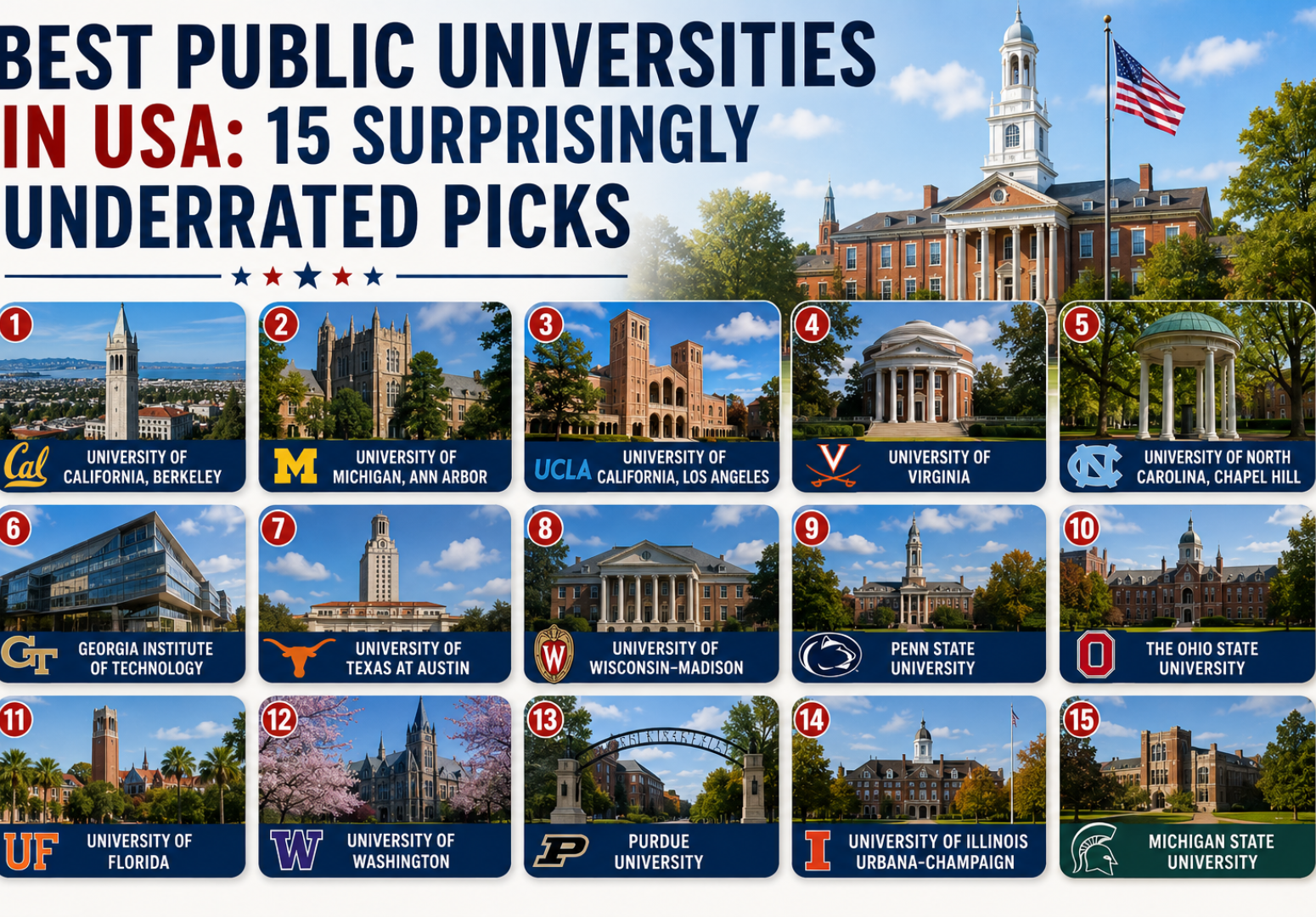
For a broader sense of where UCSD stands among its peers, it helps to look at best public universities in the US and see how the competitive landscape has shifted. UCSD’s particular strength in research — it’s home to one of the most productive research ecosystems in the country — makes it especially attractive to students interested in STEM, health sciences, and social research. That pull brings in tens of thousands of applications every cycle, all competing for the same seats.
The school’s affiliation with the Scripps Institution of Oceanography, the Salk Institute, and multiple Nobel laureate faculty members adds to its prestige in ways that translate directly into admissions pressure. Reputation compounds. As UCSD’s name gets bigger, more students want in, and the UC San Diego acceptance rate reflects that demand year after year.
Acceptance Rate by Major
Here’s something that catches a lot of applicants off guard: the UC San Diego acceptance rate is not uniform across all majors. The overall 24% figure is an average, and some programs sit far below that number. Computer science, for instance, is widely estimated to admit somewhere between 8% and 14% depending on the year. That’s comparable to some Ivy League programs, and students applying to CS need to treat it that way.
Biological sciences, cognitive science, and data science are similarly tight. These are fields where UCSD has built an exceptional reputation, which means the applicants they attract are often among the strongest in the country. If your intended major falls into one of these high-demand categories, the institutional acceptance rate is almost misleading — your actual odds are considerably lower.
On the other hand, majors in the humanities, arts, and some social sciences tend to have higher admit rates, sometimes noticeably so. This doesn’t mean those programs are easy to get into, but the competition is less intense. Some students strategically apply to a related but less competitive major with a plan to transfer internally after their first year — though internal transfers are also competitive and not guaranteed.
GPA and Academic Profile
The academic profile of admitted students at UCSD has risen alongside the falling UC San Diego acceptance rate. The average weighted GPA for admitted freshmen hovers around 4.15, which tells you that the typical admitted student has taken a rigorous course load — AP classes, honors courses, dual enrollment — and performed well in all of them. A 3.8 unweighted GPA is roughly the floor for competitive consideration, not the ceiling.
Course rigor matters as much as the GPA number itself. UC admissions readers look at what classes you took, not just what grades you earned. A 4.0 in a light courseload is less impressive than a 3.9 in the most challenging curriculum your school offers. If your high school offers 10 AP courses and you took two, that gap will be noticed by the people reading your file.
The UC system uses a calculated GPA that includes only UC-approved academic courses taken in grades 10 and 11, with bonus points for honors and AP classes. Understanding how your UC GPA is calculated — and making sure it’s as strong as possible — is one of the most practical things you can do well before your senior year application deadline.
Test Scores and UCSD Admissions
The University of California system became test-blind starting with the 2021 admissions cycle, meaning SAT and ACT scores are not considered in admissions decisions, even if submitted. This policy was initially introduced as a pandemic accommodation but has since been extended indefinitely. For the UC San Diego acceptance rate, this has had a measurable effect on applicant volume — when the test barrier is removed, more students feel confident applying.
That said, test scores can still matter indirectly. Scores are used for scholarship consideration and course placement after enrollment, so submitting strong scores is still worthwhile for students who have them. But in terms of your admissions chances, UCSD is genuinely not factoring in your SAT or ACT, which puts more weight on your GPA, coursework, activities, and personal insight questions.
The shift to test-blind has also changed the competitive dynamic in interesting ways. Students who previously might have self-selected out of applying to UCSD because of a lower test score now apply freely, increasing the pool. Meanwhile, the students who were always academically strong are still applying. The net result is a larger, stronger applicant pool and continued downward pressure on the UC San Diego acceptance rate.
Personal Insight Questions Matter
The UC application includes eight Personal Insight Questions, and applicants choose four to answer. These responses are capped at 350 words each and serve as the primary way UCSD — and all UC campuses — gets to know you as a person beyond the transcript. Given that UC campuses don’t use a traditional college essay format, these questions carry enormous weight in the evaluation process.
According to the University of California admissions guidelines, readers look for authenticity, self-reflection, and evidence of how you’ve grown through your experiences. Strong responses don’t just describe what happened — they show how you think, what you value, and what kind of student you’d be on campus. The difference between a generic response and a compelling one can genuinely shift your outcome.
The most common mistake applicants make is treating these like mini-essays about impressive achievements. Admissions readers see thousands of responses about winning competitions, leading clubs, and overcoming challenges. What stands out is specificity and honesty — a response that only you could have written, about something that genuinely shaped who you are. That authenticity is harder to fake than most students realize, and experienced readers can tell the difference immediately.
California Resident vs Out-of-State
The UC San Diego acceptance rate looks different depending on where you’re applying from. California residents have historically had an advantage in UC admissions, and that advantage is real but narrowing. In-state students benefit from lower tuition and the UC system’s mandate to prioritize California students, but out-of-state and international applicants who get in often have stronger academic profiles on average.
Out-of-state applicants face a tighter path at UCSD. Historically, the non-resident admit rate has fluctuated but tends to be lower than the California resident rate, and those admitted typically present stronger numbers across the board. International students face similar dynamics, with admit rates varying significantly by country and program.
For California residents, the competition is still intense, but the system is designed with you in mind. The UC’s guarantee that any student who graduates in the top 9% of their California high school class is eligible for UC admission — though not necessarily at UCSD specifically — provides some context for how the state tries to balance access and selectivity.
Extracurriculars and Leadership
With so many academically similar applicants in the pool, extracurricular involvement becomes a meaningful differentiator. The UC San Diego acceptance rate being as low as it is means that nearly everyone applying has strong grades — the activities, commitments, and experiences outside the classroom are where you can actually stand out from applicants with an identical GPA.
UCSD doesn’t expect a laundry list of clubs. In fact, depth tends to beat breadth in UC admissions. A student who spent four years committed to one activity — a sport, an art form, a research opportunity, a job that helped support their family — and can speak thoughtfully about what that commitment meant to them is more compelling than someone who joined fifteen clubs and listed them all without context. Quality of engagement matters more than quantity of involvement.
Community impact is another dimension that resonates. If your activities connect back to your community, your family circumstances, or a problem you genuinely care about, that coherence makes your application feel like a complete picture of a real person. The best applications tell a story — and all the pieces, from grades to activities to personal insight responses, should fit together in a way that feels intentional.
First-Generation and Low-Income Applicants
UCSD has made genuine commitments to supporting first-generation college students and applicants from lower-income backgrounds, and these commitments are reflected in both admissions and financial aid. The UC system considers socioeconomic context when reviewing applications, meaning that a student from a under-resourced school who took every available rigorous course will be viewed differently than a student from a wealthy district who did the same.
This context-sensitive review is meaningful, and first-generation applicants shouldn’t assume that a slightly lower GPA or fewer AP courses automatically disqualifies them. The admissions process is designed to ask: given what this student had access to, what did they do with it? That framing opens doors for applicants whose circumstances didn’t give them every advantage but who demonstrated real drive and potential within their context.
Financial aid at UCSD is also worth noting. The Blue and Gold Opportunity Plan covers tuition and fees for California residents whose families earn less than $80,000 per year. For many families, UCSD can end up being one of the more affordable options on the table, which makes the effort to apply — and to apply well — very much worth it.
Transfer Acceptance Rate at UCSD
The UC San Diego acceptance rate for transfer students is actually more favorable than the freshman rate, sitting around 33% to 38% in recent cycles. This is a legitimate pathway that many students don’t seriously consider when they’re first planning their college route, but it’s worth thinking about strategically.
The most common transfer path runs through California community colleges, many of which have TAG agreements — Transfer Admission Guarantee — with UC campuses including UCSD. TAG doesn’t apply to all majors, and UCSD’s TAG availability is more limited than some other UC schools, but for eligible majors it provides a much more predictable path to admission than the freshman route.
Transfer applicants are evaluated on their community college GPA, the specific courses completed, and a personal statement. Strong community college performance — typically a 3.5 or above GPA with required prerequisite courses completed — puts transfer applicants in a genuinely competitive position. For students who didn’t get into UCSD as freshmen, the transfer route is a real second chance, not a consolation prize.
Comparing UCSD to Other UCs
Among the UC campuses, UCSD sits in a tier alongside UCLA and UC Berkeley in terms of selectivity, though UCLA and Berkeley remain more competitive with admit rates around 9% and 11% respectively. UC Santa Barbara and UC Irvine both have accept rates in the 30–40% range, making them noticeably more accessible while still being strong schools.
This tiering matters for application strategy. Students who are serious about the UC system should apply to a range of campuses rather than concentrating applications on the most selective schools. UCSD is a strong middle-tier UC in terms of selectivity — more competitive than most campuses, but more accessible than the very top two. Building a balanced UC list means including UCSD as a reach or match depending on your profile, alongside at least one or two more accessible options.
The UC application itself covers all campuses at once — you select which campuses to apply to, pay a fee per campus, and submit one application. That structure makes it relatively easy to apply broadly within the system, and most counselors recommend applying to four to six UC campuses to give yourself a reasonable range of outcomes.
UCSD Acceptance Rate Trends
Looking at the trajectory of the UC San Diego acceptance rate over time makes the direction clear. In 2010, UCSD admitted around 40% of applicants. By 2015, that had dropped to roughly 33%. By 2020, it was near 30%. The current rate of approximately 24% represents a sustained decade-long trend of increasing selectivity that shows no signs of reversing.
Application volume has grown substantially — UCSD now regularly receives over 100,000 freshman applications per cycle. Class sizes haven’t grown at the same pace, which mathematically drives the admit rate down. Unless UCSD dramatically expands its freshman class size, which would require significant infrastructure investment, the trend is likely to continue.
What this means practically is that students applying three or four years from now should expect the UC San Diego acceptance rate to be lower, not higher, than it is today. Families with younger students who have UCSD as a goal should start thinking seriously about academic preparation well before junior year, when it’s often too late to meaningfully change a GPA trajectory.
FAQ
What is the current UC San Diego acceptance rate?
The UC San Diego acceptance rate for the most recent admissions cycle is approximately 24%. This means roughly 1 in 4 applicants receives an offer of admission. The rate has been declining steadily over the past decade as UCSD’s reputation and application volume have both grown significantly.
Does the acceptance rate differ by major at UCSD?
Yes, significantly. High-demand programs like computer science and biological sciences have admit rates well below the overall institutional figure, sometimes in the 8–14% range. Humanities and some social science programs tend to have higher admit rates. Your intended major plays a real role in your actual odds of admission.
Is it easier to transfer into UCSD than to apply as a freshman?
In many cases, yes. The transfer acceptance rate at UCSD hovers around 33–38%, which is higher than the freshman rate of approximately 24%. Students coming from California community colleges with strong GPAs and completed prerequisites are in a competitive position, and some majors offer TAG agreements for additional certainty.
How can I improve my chances given the UC San Diego acceptance rate?
Focus on the factors you can control: a rigorous course load with strong grades, thoughtful and specific Personal Insight Question responses, and meaningful extracurricular involvement that shows depth and commitment. Apply to a balanced list of UC campuses so your outcome doesn’t rest entirely on one school’s decision.
Conclusion
The UC San Diego acceptance rate of around 24% is a real number that deserves real respect in your college planning. This isn’t a school you can apply to casually and expect a good outcome. But it’s also not out of reach for a student who prepares thoughtfully, builds a strong academic record, and tells a genuine story through the application.
The students who get into UCSD aren’t necessarily the ones with the highest GPAs or the most impressive-sounding activities. They’re the ones whose applications feel coherent, specific, and alive — like there’s an actual person behind the numbers. That’s something every applicant can work toward, regardless of where they’re starting from.
If UCSD is your goal, take the UC San Diego acceptance rate seriously as a signal of what the competition looks like, then focus your energy on what you can actually change. Your course choices, your grades, your activities, your responses to the personal insight questions — all of that is in your hands. The UC San Diego acceptance rate tells you how hard the game is. It doesn’t tell you whether you’ll win it.