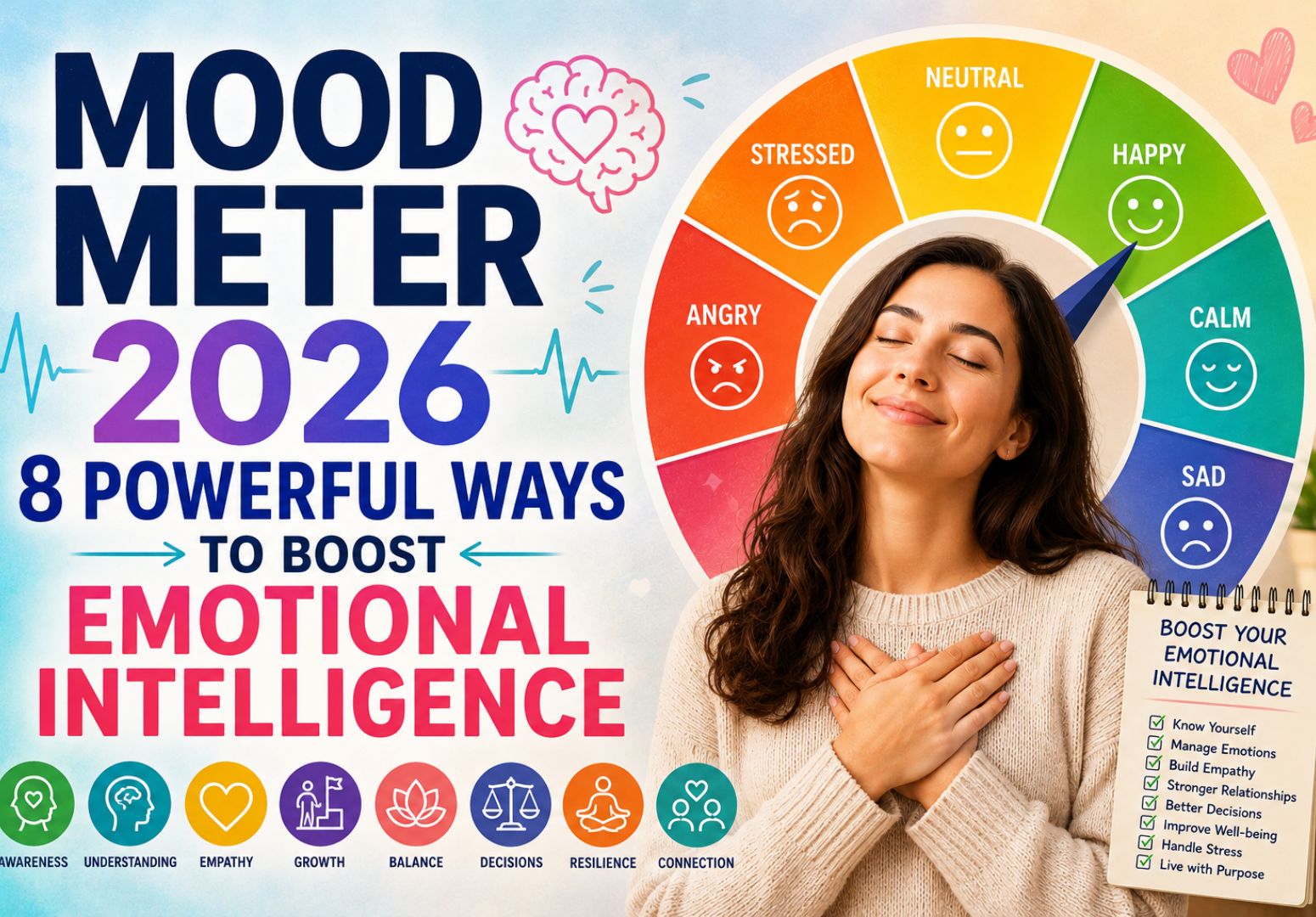
What Mood Meter Does
Emotional intelligence rarely gets the attention it deserves in education and professional development conversations. Yet the science behind it is clear — people who understand and regulate their emotions perform better, connect more deeply, and handle adversity with greater resilience. The mood meter is a research-backed tool designed to make that emotional self-awareness visible, measurable, and teachable in ways that abstract discussions about feelings simply cannot achieve.
Developed by researchers at the Yale Center for Emotional Intelligence, the mood meter gives people a practical framework for identifying exactly where they are emotionally at any given moment. It maps feelings across two dimensions — energy and pleasantness — creating a grid that places every possible emotional state into one of four colored quadrants. This simple visual structure turns something as slippery as emotion into something concrete enough to discuss, track, and ultimately shift.
Origins of Emotional Mapping
The mood meter did not emerge from casual observation. It grew out of decades of research into how emotions function and how people learn to regulate them. The Yale Center for Emotional Intelligence built the RULER approach — an acronym for Recognizing, Understanding, Labeling, Expressing, and Regulating emotions — and the mood meter serves as a central tool within that framework.
What makes the origins significant is the scientific rigor behind the design. Researchers studied how the two-axis model of emotion — the circumplex model developed by psychologist James Russell — could be applied in practical educational settings. The resulting tool was not a worksheet or a feelings chart. It was a dynamic instrument for developing genuine emotional literacy over time.
Four Quadrant Color System
Understanding the four quadrants is essential before putting the mood meter to meaningful use. The quadrants are color-coded: red for high energy and unpleasant feelings like anger or anxiety, yellow for high energy and pleasant feelings like excitement or joy, green for low energy and pleasant feelings like calm or contentment, and blue for low energy and unpleasant feelings like sadness or boredom.
These colors carry deliberate psychological weight. Red and yellow sit in the high-energy zone, while green and blue occupy the low-energy zone. Pleasant emotions sit on the right side, unpleasant on the left. A person who locates themselves in the red quadrant is not being judged — the framework explicitly teaches that all emotional states carry information and value. This non-judgmental design is one reason the mood meter works well with children, who often fear that expressing certain emotions will bring criticism.
For educators looking to integrate this into classroom practice, resources like the MasteryConnect student guide offer complementary tools for tracking student development alongside emotional learning frameworks.
Using It in Classrooms
Classroom implementation of the mood meter typically begins with a simple daily check-in. Students locate their current emotional state on the grid at the start of class, identifying both their energy level and whether their feeling is pleasant or unpleasant. Teachers then use this data to inform how they structure learning activities, transitions, and group work throughout the session.
What surprises many educators is how quickly students develop emotional vocabulary through consistent use. The mood meter pushes beyond “happy” and “sad” because those words do not distinguish between quadrants. A student who is excited and a student who is calm are both experiencing pleasant emotions, but they are in entirely different energy states that call for different approaches to focused work. Building that distinction into daily language reshapes how students think about themselves and others.
Over time, teachers report that classrooms using the mood meter develop stronger social climates. Students become more capable of identifying when a classmate seems frustrated or withdrawn, and they develop more sophisticated language for naming and discussing those observations without defaulting to judgment.
Emotional Vocabulary Expansion
One of the most underappreciated benefits of working with the mood meter is vocabulary expansion. English contains hundreds of words for emotional states, yet most people cycle through a remarkably small set of them in everyday conversation. This limitation is not just linguistic — it reflects and reinforces limited emotional awareness.
The mood meter systematically expands this vocabulary by anchoring new emotion words to a clear conceptual structure. When a student learns the word “apprehensive,” they are not just adding a synonym for nervous. They are placing a specific emotional state — moderate unpleasantness, moderate energy — on a grid they already understand. The spatial metaphor of the grid makes abstract words concrete and memorable in ways that vocabulary drills cannot replicate.
Research supports this connection between emotional vocabulary and emotional regulation. People who can name their emotional states more precisely demonstrate better regulation abilities. This finding, sometimes called emotional granularity, suggests that the mood meter does more than teach words — it builds the psychological architecture that supports self-regulation.
Workplace Applications Today
The mood meter has moved well beyond its classroom origins. Organizations in healthcare, corporate environments, and nonprofit sectors have adopted it as a team culture tool. The application in professional settings follows similar principles — individuals check in with their emotional state, develop shared language for discussing how emotions affect work, and use that awareness to improve communication and decision-making.
In high-stakes workplace environments, emotional awareness translates into tangible performance benefits. A team that can identify when collective energy is low and unpleasant after a difficult meeting is better positioned to address that state intentionally rather than carrying unacknowledged frustration into the next project. The mood meter gives teams a non-threatening entry point for these conversations.
Research Supporting Emotional Tools
The evidence base for tools like the mood meter is substantial and growing. According to research compiled by CASEL, social-emotional learning programs that include emotional identification components show consistent improvements in academic performance, behavioral outcomes, and long-term wellbeing. The mood meter, as a core component of the RULER approach, falls within this category of evidence-based interventions.
Longitudinal studies following students who received RULER instruction show effects that persist beyond the classroom. Young people who developed emotional literacy through tools like the mood meter demonstrate better relationship quality, lower rates of anxiety and depression, and stronger academic trajectories into secondary and post-secondary education. These are not marginal effects — they represent meaningful differences in life outcomes.
Digital Versions and Apps
Technology has expanded how people access and use the mood meter. The Yale Center for Emotional Intelligence developed a digital app that brings the full framework to smartphones and tablets. Users can log their emotional states, track patterns over time, and access guidance on shifting from less desired states to more desired ones.
The digital format also enables data aggregation that supports educators and organizational leaders in understanding group emotional patterns without identifying individuals. A teacher can see that most of the class was in the blue quadrant on Monday morning without knowing which specific student felt which specific emotion. This aggregate visibility helps leaders make environmental and instructional decisions based on real emotional data rather than guesswork.
Teaching Emotional Regulation Strategies
Knowing where you are on the mood meter is only the beginning. The more transformative skill involves learning how to shift your emotional state intentionally when your current state is interfering with your goals. This is where regulation strategies become central to the tool’s practical value.
Different quadrant states call for different regulation approaches. Someone in the red quadrant — high energy, unpleasant — might benefit from deep breathing, physical movement, or a brief sensory break that reduces physiological arousal before returning to a task. Someone in the blue quadrant needs activation strategies — physical movement, social connection, or exposure to stimulating content that raises energy without tipping into anxiety.
Teaching children these strategies in context — tying them explicitly to the mood meter quadrant they are working from — makes the strategies more memorable and more likely to be applied independently. Over time, students internalize not just the tool but the broader habit of checking in with themselves and responding thoughtfully rather than reactively.
Family Integration at Home
The mood meter works best when it crosses the boundary between school and home. Children who use the tool in class but never encounter it outside school develop a kind of emotional code-switching — they have RULER language at school and a completely different emotional vocabulary at home. Bridging that gap substantially amplifies the impact.
Family integration typically begins with parents learning the basic framework through school workshops or informational materials. Once parents understand the four quadrants and the color coding, they can reference the same language their children use. A simple dinner-table question — “Where were you on the mood meter today?” — opens conversations that “how was your day?” never reaches.
Supporting Students With Anxiety
Students who struggle with anxiety find particular value in the mood meter because it gives them a way to externalize and locate their emotional experience without feeling overwhelmed by it. Anxiety tends to feel all-consuming precisely because it is difficult to describe with precision. The red quadrant provides a container — a name and a location — that makes anxiety feel more manageable.
Educators working with anxious students report that the mood meter opens doors for support conversations that would otherwise feel too charged. A student who points to the red quadrant is communicating something meaningful without having to articulate why they feel anxious or describe their physical symptoms. That lower barrier to communication is sometimes enough to initiate a conversation that leads to meaningful support.
Measuring Emotional Growth Over Time
One of the most compelling features of the mood meter for educational researchers and practitioners is its capacity to serve as a longitudinal data source. When students log their emotional states consistently over weeks and months, patterns emerge that reveal a great deal about their emotional development and the emotional climate of their learning environment.
Students who begin using the tool often show a narrow range of quadrant placement — they locate themselves in a limited set of emotional states because their vocabulary and self-awareness are limited. Over time, the distribution spreads as their emotional granularity increases. They begin identifying states in quadrants they previously overlooked, and they develop more nuanced language for similar emotional experiences.
Cultural Sensitivity in Practice
Implementing the mood meter across culturally diverse classrooms requires thoughtful attention to how emotions are expressed and valued differently across cultures. Some cultures place high value on low-energy pleasant states — the green quadrant — while others consider high-energy expressions of emotion more normal and appropriate. Neither orientation is wrong; they reflect different cultural frameworks for what emotional wellbeing looks like.
Skilled facilitators using the mood meter acknowledge these differences explicitly rather than implicitly assuming one quadrant represents the goal state. The tool’s design is explicitly non-hierarchical — no quadrant is better than another, and all emotional states carry information. This framing allows cultural differences to be honored while still building shared language across a diverse community.
Leadership Development Connection
The mood meter has found a particularly receptive audience in leadership development programs. Leaders who understand their own emotional patterns make better decisions, communicate more effectively under pressure, and build stronger team cultures. Emotional self-awareness — the fundamental skill the mood meter develops — sits at the foundation of every other leadership competency.
Executive coaching programs increasingly incorporate mood tracking as a baseline practice. Leaders who begin logging their emotional states consistently often report their first significant insight within weeks: they discover patterns they did not consciously recognize. The high-pressure meeting that reliably moves them into the red quadrant. The creative brainstorming session that consistently generates yellow-quadrant energy. That awareness creates choice where previously there was only reaction.
Common Implementation Challenges
Even well-designed tools face resistance during implementation. The mood meter encounters several predictable challenges that practitioners should anticipate. Adolescent students sometimes treat the daily check-in as performative rather than reflective — they locate themselves wherever seems socially acceptable rather than where they actually are. This authenticity gap is real and worth addressing directly.
The solution is not enforcement but culture-building. When teachers model genuine use of the mood meter — including honest placement in the blue or red quadrant when appropriate — they signal that authenticity is valued over performance. Gradually, classroom culture shifts toward genuine engagement because students witness that honest emotional disclosure is met with respect rather than judgment.
Frequently Asked Questions
What age groups benefit most from using a mood meter?
The mood meter works across all ages, from early childhood through adulthood. Younger children benefit from simplified versions, while adults engage fully with the complete four-quadrant framework.
How does the mood meter differ from standard feelings charts?
Standard feelings charts list emotions without structure. The mood meter organizes emotions along energy and pleasantness dimensions, giving users a spatial understanding of emotional states that supports deeper regulation skills.
Can the mood meter help students with emotional regulation challenges?
Yes. The tool gives students a concrete framework for identifying and naming their emotional states, which research consistently links to improved self-regulation and reduced behavioral difficulties.
How long does it take to see results from mood meter use in classrooms?
Most educators report measurable changes in emotional vocabulary and classroom climate within six to eight weeks of consistent daily use.
Conclusion: Emotions Shape Everything
The mood meter is not a classroom decoration or a feel-good add-on to curriculum. It is a scientifically grounded tool that builds one of the most consequential skills humans can develop — the ability to recognize, name, and work intelligently with their own emotional states. Every dimension of performance, relationship, and wellbeing connects back to that foundational capacity.
What makes the mood meter distinctive is how it makes the invisible visible. Emotions influence every decision, every conversation, and every moment of focused work, usually without our conscious awareness. By bringing emotional states onto a visible grid with shared language, the mood meter gives individuals and communities the means to engage with emotional experience deliberately rather than reactively. Teachers who use it consistently describe classrooms that feel fundamentally different — calmer, more connected, more capable of honest communication. Leaders who apply it report better team dynamics and greater personal clarity under pressure. The evidence, both research-based and experiential, points in the same direction. Investing in emotional intelligence through tools like the mood meter is not a soft initiative — it is one of the highest-leverage investments any educator, parent, or organizational leader can make.