Early Education Landscape Today
For a long time, early childhood education sat quietly in the background — underfunded, underappreciated, and honestly a little misunderstood. Teachers working with three and four-year-olds were often treated as glorified babysitters rather than the skilled professionals they actually are. That perception is changing fast, and the early childhood education news coming out of 2026 is proof of that shift.
Governments, researchers, and parents are paying attention in a way they simply weren’t before. Budgets are being reallocated. Curriculums are being redesigned. And the conversations happening in policy rooms are finally reflecting what educators have known for years — what happens before kindergarten matters enormously.
Why 2026 Feels Different
Something shifted after the pandemic years. Children who missed critical social and developmental windows between 2020 and 2022 are now showing up in school systems with gaps that teachers are scrambling to address. That reality forced a reckoning. Suddenly, early childhood education news wasn’t just for specialists — it became dinner table conversation for millions of families.
You can see this reflected in how classroom community building has become a central focus in early learning environments. Educators are being retrained not just to teach content but to help children rebuild the social muscles that isolation weakened. The urgency feels real because it is real.
The result is a surge of investment, innovation, and honest debate about what early education should look like. Some of it is inspiring. Some of it is messy. All of it is worth paying attention to.
Play-Based Learning Makes Comeback
If you’ve been following early childhood education news lately, you’ve probably noticed one phrase keeps coming up — play-based learning. After years of pushing academic content earlier and earlier into preschool classrooms, the research pendulum has swung back. Hard.
Studies published in early 2026 confirm what many child development experts have argued for decades: children aged three to six learn more effectively through structured play than through formal instruction. The skills developed during imaginative play — problem-solving, cooperation, emotional regulation — are exactly the ones that predict long-term academic success.
Several school districts across the U.S. and Europe have already rolled back early literacy drills in favor of more play-centered environments. It’s not about lowering expectations. It’s about matching the method to how young brains actually work.
Technology in Tiny Classrooms
AI-powered learning tools have officially made their way into early childhood classrooms, and the early childhood education news around this is both exciting and a little complicated. Apps that adapt to a child’s pace, voice-recognition tools that support early readers, and digital assessments that help teachers spot developmental delays earlier — these are genuinely useful innovations.
But there’s a real tension here. Screen time recommendations for children under five haven’t changed. The American Academy of Pediatrics still advises very limited digital exposure for toddlers. So how do you integrate helpful technology without crossing a line that research says matters?
The honest answer is — schools are figuring it out in real time. Some are doing it thoughtfully. Others are moving too fast. Either way, it’s one of the most-watched stories in early childhood education circles right now.
Teacher Shortages Hit Hardest
No area of education has been hit harder by staffing shortages than early childhood programs. Wages remain stubbornly low despite increased public attention. In the United States, the average early childhood educator earns less than $35,000 per year — a number that hasn’t kept pace with the cost of living in most major cities.
The early childhood education news on this front is sobering. Childcare centers are closing. Waiting lists for preschool spots are growing. And the educators who remain are burning out faster than they can be replaced. Some states have introduced salary supplements and loan forgiveness programs for ECE professionals, but these feel like bandages on a much deeper wound.
Until compensation reflects the actual complexity and importance of this work, the shortage will continue. And when teachers leave, children pay the price.
Mental Health Gets Prioritized in Early Childhood Education News
One of the most significant shifts visible in early childhood education news right now is the explicit prioritization of mental health — for children and teachers both. Social-emotional learning, once considered a soft add-on, is now being treated as core curriculum in many early childhood programs.
Research from the National Institute of Mental Health shows that half of all lifetime mental health conditions begin by age fourteen, with many roots tracing back even earlier. That data has pushed early childhood programs to incorporate emotion-recognition activities, calming strategies, and relationship-building exercises into daily routines.
Tools like mood tracking and emotional check-ins are showing up in preschool classrooms across the country. It’s a meaningful change — and one that recognizes children as whole people, not just academic sponges.
Policy Changes Reshape Access
The policy landscape around early childhood education shifted considerably in 2025 and 2026. Several countries expanded publicly funded preschool programs, lowering the entry age and extending program hours. In the U.S., a handful of states moved toward universal pre-K for three-year-olds — a major expansion from the four-year-old programs that were previously the standard.
According to the National Institute for Early Education Research, access to quality preschool remains deeply unequal, with children from lower-income families far less likely to attend programs that meet basic quality benchmarks. That gap is the central policy challenge of this moment.
Progress is happening, but it’s uneven. Urban areas are moving faster than rural ones. Well-funded districts are pulling ahead while under-resourced communities fall further behind. The early childhood education news around policy is a story of both real wins and persistent gaps.
Parental Involvement Gets Reimagined
Parent engagement has always been part of the early childhood conversation, but the approach is getting a significant rethink. Old models treated parents as passive recipients of information — newsletters sent home, occasional parent-teacher conferences, maybe a bake sale. That model doesn’t match how families actually live or communicate today.
Programs in 2026 are experimenting with family learning hubs, digital communication platforms, and home-visit models that bring early childhood educators directly into family environments. The goal is a genuine partnership rather than a one-way information pipeline.
Research supports this approach strongly. When parents are meaningfully involved in their child’s early learning, outcomes improve across every measurable dimension — language development, social skills, school readiness, and even long-term economic mobility.
Curriculum Diversity Takes Center Stage
Early childhood education news increasingly reflects a broader push for culturally responsive curriculum. Programs are moving away from one-size-fits-all content and toward materials that reflect the actual diversity of the children in the room — their languages, family structures, traditions, and lived experiences.
This isn’t just about representation for its own sake, though that matters. It’s about cognitive engagement. Children learn better when they see themselves in the stories being told, the images on the wall, and the characters in the books being read aloud.
The shift is visible in publishing trends, classroom design, and even in how educators are being trained. Diversity-focused professional development hours have increased significantly in early childhood teacher certification programs across multiple states.
Language Development New Research
The science of how young children acquire language has taken some genuinely interesting turns in recent months. Researchers are increasingly focused on the quality of language exposure rather than just the quantity. It’s not simply how many words a child hears — it’s the back-and-forth conversational exchange, the questions asked, the pauses allowed.
This has practical implications for early childhood classrooms. Teachers are being coached to increase what researchers call “serve and return” interactions — responding to a child’s gesture, sound, or question in a way that extends the conversation. It sounds simple but requires real skill and intentionality.
Early childhood education news in this space is genuinely hopeful. Small adjustments in how teachers talk with children — not just to them — can produce measurable gains in vocabulary, comprehension, and later reading ability.
Nutrition and Learning Connection
Something that doesn’t always make headlines but absolutely should — the link between early childhood nutrition and cognitive development is clearer than ever. Hunger affects attention, memory, and emotional regulation in ways that directly undermine everything a preschool teacher is trying to accomplish.
Programs that provide breakfast, snacks, and lunch aren’t just addressing a welfare need — they’re creating the neurological conditions for learning to actually happen. Early childhood education news from nutrition researchers in 2026 reinforces that food security is an education issue, not a separate social services issue.
Several school-based models are integrating nutrition education into the curriculum itself, teaching children about food, farming, and health in age-appropriate ways. It’s early childhood education meeting public health — and the combination is producing promising results.
Outdoor Learning Gains Ground
Forest schools, nature-based preschools, and outdoor learning programs are no longer fringe ideas. They’ve moved firmly into the mainstream early childhood conversation. The early childhood education news around outdoor learning is overwhelmingly positive — children who spend meaningful time outdoors show better attention spans, lower stress levels, and stronger gross motor development.
Scandinavia has led this movement for decades, but programs in the U.S., UK, and Australia are catching up quickly. Urban schools are getting creative — rooftop gardens, schoolyard redesigns, and community park partnerships are bringing outdoor learning to children who don’t have easy access to green space.
The research case is solid. The implementation challenges are real — weather, liability, logistics. But the momentum behind outdoor learning isn’t slowing down.
Special Needs Early Intervention
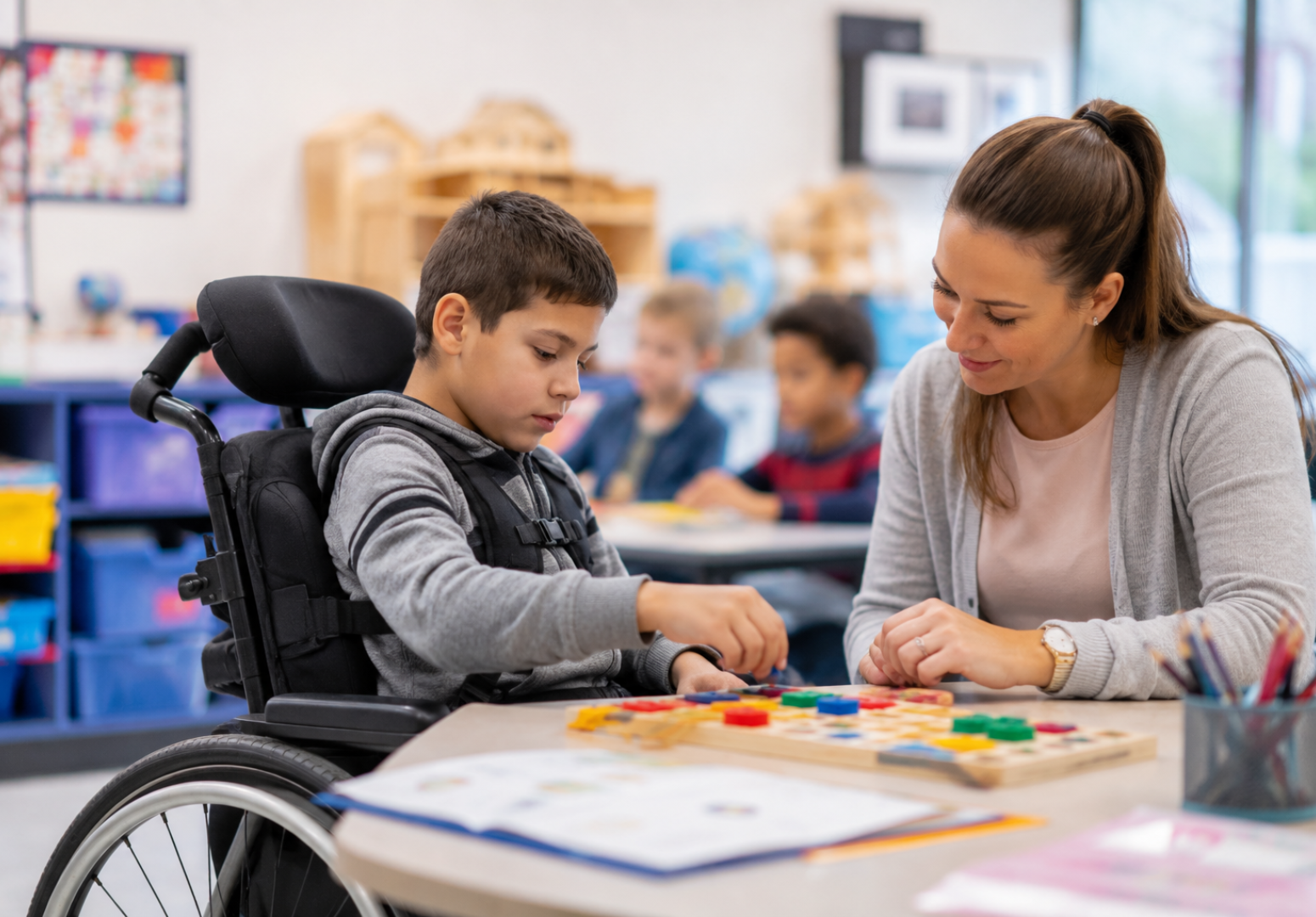
Early identification and intervention for children with developmental differences is one of the brightest spots in current early childhood education news. The earlier a child receives targeted support — for autism, speech delays, sensory processing differences, or learning disabilities — the better the long-term outcomes.
Screening tools have improved significantly. Teachers are being trained to spot early warning signs that might have been missed or dismissed a generation ago. And insurance and government funding for early intervention services has expanded in several states and countries.
The challenge now is reducing the wait times between identification and actual service delivery. In many regions, a child can wait six to eighteen months after a diagnosis before receiving meaningful support. That window is exactly the time when intervention has the most impact.
Global ECE Comparisons Matter
It’s worth stepping back and looking at what early childhood education news looks like globally. Finland famously doesn’t start formal reading instruction until age seven — and consistently produces some of the world’s strongest literacy outcomes. Japan emphasizes social development and group harmony in early childhood settings. New Zealand’s Te Whāriki framework treats children as confident and competent learners from birth.
These international models aren’t just interesting footnotes. They’re genuine alternatives to the test-heavy, outcomes-focused approach that has dominated English-speaking education systems. Policymakers are paying more attention to these comparisons than they have in years.
The question isn’t which country gets it perfectly right. The question is what lessons are worth borrowing — and being honest about what the research actually shows.
Funding Gaps Remain Serious in Early Childhood Education News
Despite all the positive early childhood education news around innovation and policy change, the funding picture remains deeply uneven. Federal investment in early childhood programs in the U.S. still falls far short of what research suggests is necessary to close developmental gaps. Title I funding, Head Start appropriations, and childcare subsidies have all faced budget pressures in recent years.
The economic case for investing in early childhood education is ironclad. Nobel Prize-winning economist James Heckman has shown repeatedly that every dollar invested in quality early childhood programs returns seven to thirteen dollars in long-term economic benefits through reduced crime, higher employment, and better health outcomes.
That math should make early childhood funding a bipartisan no-brainer. It doesn’t always work out that way in practice, which is why advocates and educators keep pushing the case, year after year.
What Comes Next for ECE
The early childhood education news landscape in 2026 is genuinely energizing, even when the challenges feel heavy. There’s more research, more policy attention, more public awareness, and more honest conversation about what young children actually need than there has been in a long time.
The next few years will test whether that attention translates into sustained investment or fades back into the background the way it has before. Early childhood educators — underpaid, overworked, and still showing up every day — deserve better than another cycle of enthusiasm without follow-through.
If you’re a parent, educator, policymaker, or just someone who cares about the next generation, staying engaged with early childhood education news isn’t optional anymore. These are the decisions that shape everything that comes after.
Frequently Asked Questions about Early Childhood Education News
What is the focus of early childhood education news in 2026?
The biggest themes right now include play-based learning, mental health integration, teacher shortages, technology use in preschools, and major policy changes around access and funding. It’s a particularly active moment for the field.
Why is early childhood education news getting more attention now?
Post-pandemic developmental gaps made the stakes impossible to ignore. Children who missed critical early learning windows between 2020 and 2022 showed measurable setbacks, pushing governments and families to take early childhood programs far more seriously.
How does play-based learning fit into current early childhood education news?
Play-based learning is one of the dominant stories right now. Research in 2026 has reinforced that structured play produces better developmental outcomes for young children than formal academic instruction introduced too early. Many programs are restructuring around this evidence.
What can parents do based on current early childhood education news?
Stay informed, ask questions about your child’s program, advocate for better teacher pay, and look for settings that prioritize social-emotional development alongside academic readiness. The research is clear — quality matters more than quantity when it comes to early education.
Conclusion of Early Childhood Education News
Early childhood education news in 2026 tells a story that is both hopeful and unfinished. The science is stronger than ever. The policy momentum is real. And the public conversation has shifted in ways that felt impossible just a few years ago. Children aged zero to eight are finally getting the serious attention their developmental stage has always deserved.
But attention alone doesn’t build classrooms, train teachers, or close funding gaps. The work ahead requires sustained commitment — from governments willing to fund what research supports, from communities willing to value educators properly, and from families willing to stay engaged beyond the headlines.
Early childhood education isn’t a niche concern. It’s the foundation of everything. The news coming out of 2026 suggests more people are starting to understand that. The question now is what gets built on that understanding — and whether it lasts.