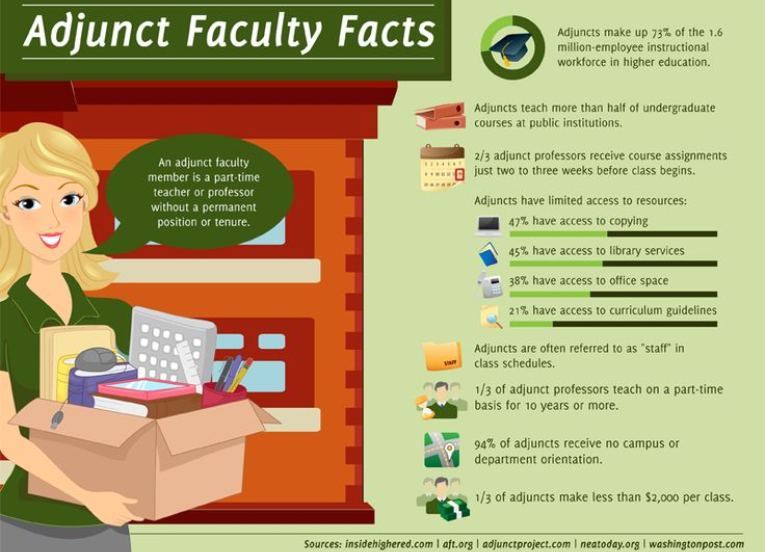
Finding adjunct faculty vacancies can feel harder than it should.
Some jobs are posted clearly. Others sit inside hiring pools. Some departments hire only when enrollment shifts. Many schools want the same small set of documents, but each posting words it a little differently.
That is why a smart search matters more than a wide search.
If you want part-time college teaching work, this guide will help you find better openings, understand what schools want, and apply in a way that gives you a real chance.
Key Takeaways of adjunct faculty vacancies
- Adjunct faculty vacancies are often posted as open jobs, talent pools, or semester-based teaching needs.
- Most colleges ask for a CV or resume, a cover letter, and official transcripts. National Louis University
- Many schools hire adjuncts only when course demand appears, so a posting does not always mean an immediate class assignment. Maricopa Community Colleges
- Postsecondary teaching jobs are expected to keep growing, with about 114,000 openings a year on average across the decade. Bureau of Labor Statistics
- Strong applicants match their subject expertise, teaching proof, and availability to the exact department need.
- A focused application beats sending the same generic file everywhere.
Why Adjunct Faculty Vacancies Matter More Than Ever
Adjunct roles are often the easiest way into college teaching.
They can help you build classroom experience, move from industry into teaching, add income, or grow your academic network. For some people, adjunct work is a long-term fit. For others, it is a bridge to full-time teaching or instructional design.
The market is active. The U.S. Bureau of Labor Statistics says employment for postsecondary teachers is projected to grow 7% from 2024 to 2034, with about 114,000 openings each year on average.
That does not mean every opening is easy to win.
It means there is steady demand, but schools still choose carefully. Departments want people who can step in fast, teach well, and handle students with little hand-holding.
What “Adjunct Faculty Vacancies” Usually Means
Not every vacancy works the same way.
Some colleges post a real opening tied to a class that starts soon. Others build a pool of approved instructors and reach out later. Maricopa Community Colleges says its adjunct process puts applicants into a searchable pool used by hiring managers as needed, and Northeast State Community College says its adjunct pool postings are temporary and do not guarantee an open class right away.
So when you see a posting, it usually falls into one of these groups:
- Immediate vacancy
A department needs someone now. - Adjunct pool
The school wants qualified people ready for future terms. - Ongoing posting
The department hires again and again across semesters. - Specialized course need
A school wants a person with a very specific background, such as law, nursing, math, counseling, or lab science. Examples of this kind of active subject-based hiring appear on DePaul, Lewis University, and UNT career pages. DePaul University Academics
This matters because your strategy changes depending on the posting type.
For immediate openings, speed matters.
For hiring pools, fit and readiness matter more.
Where to Find Adjunct Faculty Vacancies
A lot of applicants look only at big job boards.
That is a mistake.
The best openings are often spread across several places, and good candidates check all of them.
1. University and college career pages
Start with official school sites.
They are the source of truth. You can find faculty and non-tenure-track openings directly on school HR pages, including major institutions such as Northwestern and the University of Illinois.
Use this when:
- You already know the schools you want
- You want local roles
- You want direct application links
2. Higher education job boards
HigherEdJobs lists a large number of adjunct and part-time teaching openings and updates them often. Its adjunct section shows tens of thousands of positions, which makes it a strong starting point for search and alerts.
Use this when:
- You want broad search by subject
- You are open to relocation
- You want to compare pay, field, and school type
3. Community college systems
Community colleges often hire adjuncts every term.
These schools are great for professionals with teaching ability and real-world experience. Many also hire for evening, weekend, dual-enrollment, and career education courses.
4. Department-level networking
Some adjunct roles never get much attention before they are filled.
That is why it helps to connect with department chairs, program coordinators, and faculty leads after you apply. A short, polite note can move your file from the database into a real conversation.
Minimum Requirements for Most adjunct faculty vacancies
This is where many applicants lose ground.
They assume a strong degree is enough.
It is not.
Most adjunct roles ask for a combination of subject knowledge, documents, and teaching readiness. National Louis University states that most adjunct applications require a CV or resume, cover letter, and official transcripts.
Here is a simple table you can use.
| Requirement | What schools usually want | Why it matters |
|---|---|---|
| Education | Master’s degree or higher, often in the teaching field or a related one | Confirms subject knowledge |
| CV or resume | Clear academic or professional background | Shows fit fast |
| Cover letter | Role-specific interest and teaching value | Proves effort and alignment |
| Official transcripts | Verified degrees and coursework | Confirms qualifications |
| Teaching proof | Syllabus, evaluations, LMS use, or training | Reduces hiring risk |
| Availability | Days, times, formats, campus range | Helps departments schedule you |
Common mistakes
- Applying without transcripts ready
- Sending the same cover letter to every school
- Not naming the subject areas you can teach
- Hiding teaching experience inside a long resume
- Failing to mention online teaching tools
How to Search Smarter for adjunct faculty vacancies
A better search saves hours.
Use exact phrases like:
- adjunct faculty vacancies
- adjunct instructor jobs
- part-time faculty positions
- adjunct professor openings
- online adjunct faculty jobs
- community college adjunct jobs
Then narrow by:
- Subject
- Campus type
- City or state
- Online or in-person
- Term start date
Also search in combinations:
- “ adjunct faculty vacancies”
- “adjunct faculty jobs psychology”
- “adjunct instructor pool nursing”
- “part-time faculty positions English online”
Create a simple spreadsheet to track:
- School name
- Job title
- Deadline
- Documents needed
- Contact person
- Status
This one habit makes follow-up much easier.
How to Read a Posting the Right Way
Do not just skim.
Read for the real need.
A posting may say “adjunct faculty,” but the hidden signal is often in the details. One school may need someone with industry certifications. Another may need weekend availability. Another may want experience with adult learners or online platforms.
Look for these clues:
- Required degree level
- Minimum graduate credit hours in the discipline
- In-person, hybrid, or remote format
- Day, evening, or weekend schedule
- Student type, such as undergraduate, graduate, or adult learners
- Special tools, such as Canvas or Blackboard
When your application speaks to those details, you sound like a solution, not another applicant.
How to Build an Application That Gets Attention
A strong adjunct application is simple, clear, and direct.
Your CV or resume
Lead with fit.
Put the most relevant teaching and subject matter experience at the top. If you come from industry, show how your real-world work helps students.
Good sections include:
- Professional summary
- Education
- Teaching experience
- Courses taught
- Industry experience
- Certifications
- Technology skills
- Publications or presentations, if useful
Your cover letter
Your cover letter should answer three questions:
- Why this school?
- Why this subject area?
- Why you?
A weak line says: “I am writing to apply for the adjunct position.”
A better line says: “I am applying for your adjunct faculty opening in business analytics because my graduate training, five years of teaching adult learners, and ten years in data-driven operations match the needs of your department.”
Your transcripts
Have them ready early.
Schools often slow down the process until transcripts arrive. That is not a small detail. It can decide whether your application moves forward.
What Hiring Committees Want But Do Not Always Say
They want someone easy to trust.
That means:
- You answer clearly
- Your documents match the posting
- Your teaching looks student-focused
- You seem dependable
- You can step in without drama
Departments worry about last-minute class coverage.
So if you can show flexibility, fast communication, and real teaching value, you become more attractive.
Examples:
- “Available for evening and weekend sections”
- “Comfortable with online, hybrid, and in-person formats”
- “Can teach introductory and advanced sections”
- “Able to start next term”
Best Fields for Adjunct Faculty Vacancies
Openings vary by subject, but some areas often stay active.
Examples from current postings include law, counseling, education, music, environmental science, mathematics, biology, criminal justice, media arts, and health sciences.
Fields that often show steady need include:
- Business
- Nursing and allied health
- Computer science and IT
- Math
- English and composition
- Education
- Psychology
- Criminal justice
- Career and technical education
If your field is crowded, widen your options.
You may qualify for:
- Intro courses
- Survey courses
- Online sections
- Continuing education
- Adult learning programs
- Related departments
In-Person vs Online Adjunct Faculty Vacancies
Online teaching has opened new doors.
But online roles are not easier.
Schools still want strong communication, course management skill, and comfort with digital tools. If you have used Canvas, Blackboard, Moodle, Zoom, or Teams, say so clearly.
Good proof includes:
- Online course delivery
- Discussion board management
- Video feedback
- Student retention work
- Accessibility awareness
Even if you have not taught fully online, training experience, webinars, staff education, and professional presentations can help.
How to Stand Out Without Overdoing It
You do not need a flashy application.
You need a useful one.
Here is what works:
- Tailor each cover letter
- Name the exact courses you can teach
- Show teaching and industry value together
- Keep formatting clean
- Use a short, strong subject line in email follow-up
- Mention student outcomes when possible
Example: “In my last role, I taught first-year writing to adult learners and kept an average course completion rate above department targets.”
That is more convincing than broad claims like: “I am passionate about student success.”
Follow-Up Tips That Feel Professional
Many applicants never follow up.
That leaves space for you.
A good follow-up email should:
- Be sent about one week after applying
- Mention the exact posting
- Re-state fit in one or two lines
- Thank the department or HR contact
- Stay polite and short
You are not begging.
You are helping them see your fit.
A Simple Action Plan for Job Seekers
Use this 7-step plan.
- Pick your target subjects.
- Make a list of 25 schools.
- Check official career pages first.
- Search major higher-ed job boards next.
- Prepare your CV, cover letter, and transcripts.
- Apply to both active openings and hiring pools.
- Follow up with care and track every application.
Done right, this gives you momentum fast.
Final Thoughts on Adjunct Faculty Vacancies
The best way to win adjunct faculty vacancies is not to apply everywhere with the same file.
It is to target the right schools, understand how adjunct hiring really works, and present yourself as a ready-to-teach professional.
Some roles will be immediate.
Some will sit in a hiring pool for months.
Some will never move.
That is normal.
Stay organized. Keep your documents ready. Apply with purpose. And treat each posting like a real department need, not just a keyword on a job board.
That approach gives you a much better shot at turning interest into interviews and interviews into teaching assignments.
Frequently Asked Questions of adjunct faculty vacancies
1. What are adjunct faculty vacancies?
Adjunct faculty vacancies are part-time college teaching openings. They may be tied to one course, a future semester, or a larger hiring pool for departments that need flexible instructors.
2. Do adjunct faculty vacancies always mean a class is available right away?
No. Many schools use adjunct pools and contact approved candidates only when sections open or enrollment changes.
3. What documents do I need for adjunct faculty vacancies?
Most schools ask for a CV or resume, cover letter, and official transcripts. Some also ask for certifications, references, or teaching samples.
4. Where should I look first for aadjunct faculty vacancies ?
Start with official university and college career pages. Then use higher-ed job boards to widen your search.
5. Can industry professionals apply for adjunct instructor jobs?
Yes. Many schools value real-world experience, especially in business, healthcare, technology, law, and technical fields.
6. Are online adjunct faculty vacancies worth applying for?
Yes, if you can show strong communication skills and comfort with online teaching tools. Remote roles can expand your options beyond your local area.
7. How can I improve my chances of getting hired through adjunct faculty vacancies ?
Tailor each application, keep transcripts ready, highlight the courses you can teach, and follow up professionally after applying.