What Is Pyruvate Oxidation
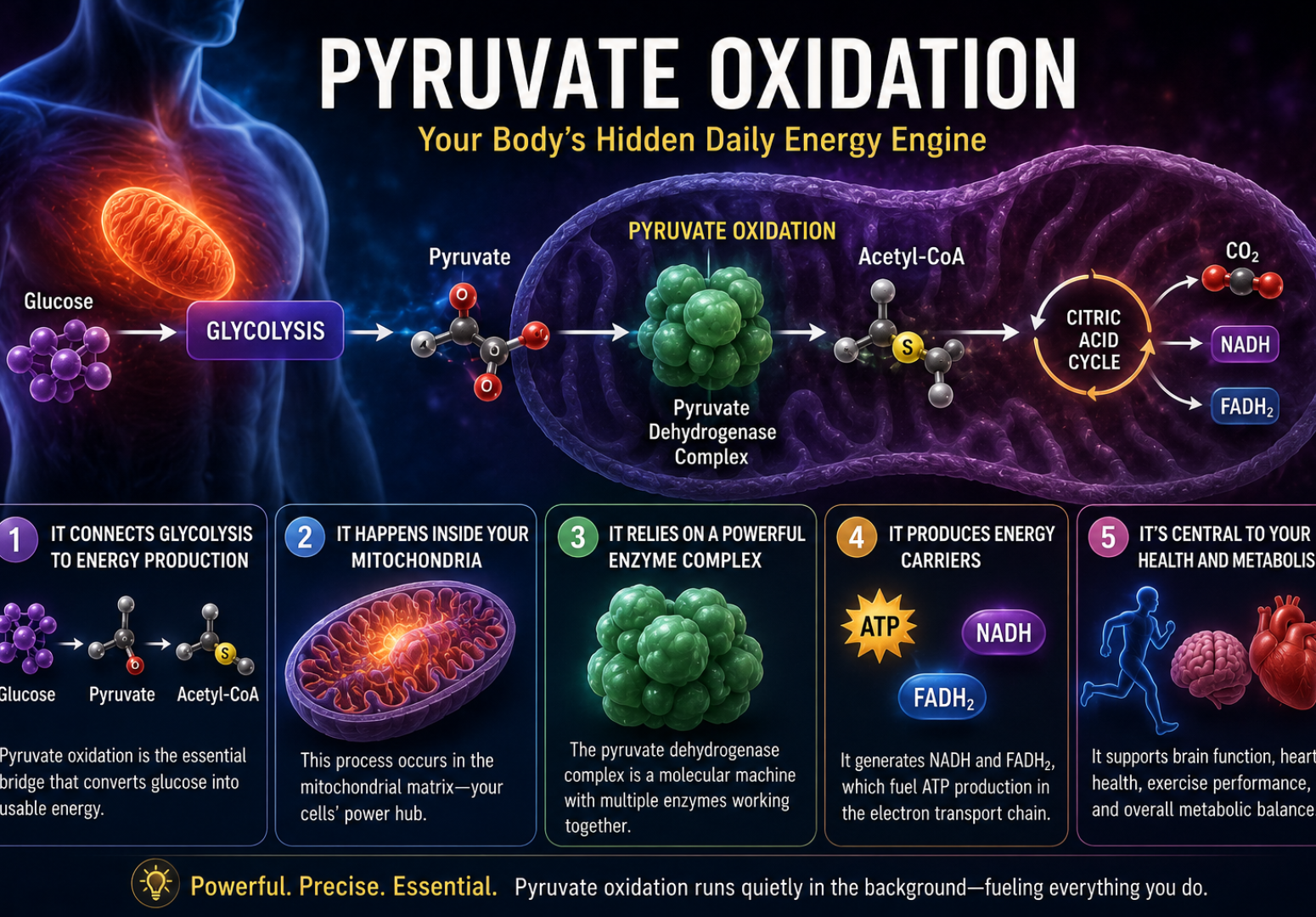
Pyruvate oxidation is the step where a molecule called pyruvate, made from the breakdown of glucose, gets converted into something called acetyl-CoA. This happens inside the mitochondria, the small energy factories living inside almost every cell in your body. Think of this pathway as a toll booth — pyruvate cannot move forward into the bigger energy-producing machinery without passing through this checkpoint first.
The process sounds technical, but the basic idea is simple. Pyruvate loses a carbon atom, picks up a coenzyme, and transforms into a form your cells can actually use for serious energy production. This single chemical switch decides how efficiently your body converts breakfast into the fuel that gets you through a long meeting or a tough workout.
It helps to picture this process as the quiet middle manager of metabolism. It does not get the spotlight that glycolysis or the Krebs cycle get in textbooks, yet nothing downstream works without it doing its job correctly. Skip this step, even partially, and the entire energy chain starts to wobble in ways your body notices almost immediately, often as tiredness you cannot quite explain.
Where Pyruvate Oxidation Happens
This entire reaction takes place inside the mitochondrial matrix, which is the innermost compartment of the mitochondria. Glycolysis, the step before this one, happens out in the cytoplasm of the cell, so pyruvate has to physically travel across the mitochondrial membrane before oxidation can even begin.
If you want to read more about how structures inside living systems are organized and classified, this study of biological structures offers a useful side reference for students building a foundation in cell biology. Once pyruvate crosses into the matrix, a whole team of enzymes is waiting there, ready to strip it down and prepare it for the next phase of energy production.
This crossing is not random movement either. Pyruvate needs a specific transport protein embedded in the mitochondrial membrane to get inside, since the membrane itself is built to keep most molecules out unless they have the right key. Without that transporter working correctly, the pathway simply cannot begin, no matter how much pyruvate is sitting around in the cytoplasm waiting.
The Pyruvate Dehydrogenase Complex
The real star of this conversion process is an enzyme cluster called the pyruvate dehydrogenase complex, often shortened to PDC. This is not just one enzyme doing one job — it is actually three different enzymes working together in a coordinated assembly line. Each enzyme handles a specific part of the conversion, almost like workers on a factory floor passing a product down the line.
PDC needs several helper molecules to function properly, including thiamine, which comes from vitamin B1. This is actually one reason severe thiamine deficiency causes serious metabolic problems — without it, this pathway slows down dramatically, and energy production takes a real hit.
Researchers have actually mapped out the structure of this complex in remarkable detail, showing dozens of individual enzyme units clustered together in a sphere-like arrangement. That level of organization is not an accident — it allows the intermediate products of this process to pass quickly from one enzyme to the next without drifting away or getting lost in the surrounding cellular fluid.
Breaking Down Pyruvate Molecules
During the pathway, the three-carbon pyruvate molecule loses one carbon atom in the form of carbon dioxide. This is actually one of the reasons you exhale carbon dioxide constantly, even when you are sitting still doing nothing strenuous.
What remains after that carbon loss is a two-carbon fragment, which then gets attached to a molecule called coenzyme A. This combination forms acetyl-CoA, the actual product that this conversion process exists to create. Without this conversion, your cells would be stuck with a metabolic dead end, unable to push forward into the next stage of cellular respiration.
It is worth noting that this step is irreversible under normal cellular conditions. Once this pathway converts pyruvate into acetyl-CoA, there is no simple way to turn it back into glucose later. This one-way nature is part of why the body relies on separate pathways entirely, like gluconeogenesis, when it actually needs to rebuild glucose from other raw materials.
Acetyl-CoA Formation Explained Simply
Acetyl-CoA is the real prize at the end of this process. It acts like a passport that allows the carbon fragment to enter the citric acid cycle, also known as the Krebs cycle, where the bulk of your cell’s energy currency gets generated.
One molecule of glucose eventually produces two molecules of pyruvate, and each of those gets oxidized separately. That means one glucose molecule indirectly leads to two rounds of acetyl-CoA formation, doubling the energy potential extracted from a single sugar molecule. This is part of why glucose is such an efficient fuel source for the human body.
Fats and certain amino acids can also feed into acetyl-CoA production, though not through the pathway directly. This shared endpoint is actually one of the more elegant features of metabolism — multiple different fuel sources eventually funnel into the same molecule, allowing the citric acid cycle to extract energy regardless of whether the original fuel came from carbohydrates, fats, or protein.
Why Oxygen Matters Here
Pyruvate oxidation technically does not use oxygen directly in its own reaction steps, but it absolutely depends on oxygen being available elsewhere in the mitochondria. Without enough oxygen, the entire downstream system backs up, and pyruvate gets diverted toward fermentation instead.
Athletes and coaches who understand this connection often design training programs specifically to improve how well the body delivers oxygen to working muscles. Better oxygen delivery means this conversion process can keep running at a higher intensity for longer, which directly translates into improved endurance and a delayed onset of that familiar muscle fatigue.
Linking Glycolysis And Oxidation
Glycolysis and pyruvate oxidation are two separate processes, but they are tightly connected, almost like two chapters in the same story. According to this overview of cellular respiration, glucose breaks down into pyruvate in the cytoplasm, and this pathway picks up exactly where glycolysis leaves off, inside the mitochondria.
This handoff matters because it represents the shift from a low-yield process to a high-yield one. Glycolysis alone produces a small amount of usable energy, but this process opens the door to the citric acid cycle and the electron transport chain, where the real energy jackpot gets cashed in.
Some textbooks group glycolysis, pyruvate oxidation, and the citric acid cycle together under one umbrella, which can make it hard for students to see where one process ends and the next begins. Treating the pathway as its own distinct step, with its own enzymes and its own regulation, actually makes the whole system easier to understand and remember.
Energy Yield From Oxidation
Each round of pyruvate oxidation generates one molecule of NADH, an electron carrier that later feeds into the electron transport chain to produce large amounts of cellular energy. This electron transport process is responsible for generating the overwhelming majority of usable energy in human cells, often cited as over 90 percent of total cellular output.
Since glucose breakdown produces two pyruvate molecules, you get two NADH molecules from this stage alone for every single glucose molecule processed. That might sound small, but multiplied across trillions of cells working constantly, it adds up to a massive contribution toward keeping your body running.
Put another way, this pathway is not the biggest energy producer in the whole chain, but it is the gatekeeper that determines how much raw material reaches the stages that are. A bottleneck here, even a small one, limits everything that comes after it, which is exactly why this step gets so much attention from researchers studying metabolic disease.
Common Enzyme Cofactors Involved
Pyruvate oxidation does not work on its own steam. It requires five separate cofactors to function smoothly: thiamine pyrophosphate, lipoic acid, coenzyme A, FAD, and NAD+. Each one plays a distinct supporting role in the chemical handoffs happening within the pyruvate dehydrogenase complex.
A deficiency in any single one of these cofactors can throw off the entire pathway. This is why nutrition genuinely matters at a cellular level — it is not just about calories, it is about whether your body has the raw materials to actually process those calories efficiently through pathways like this one.
Lipoic acid in particular gets less attention than thiamine, but it plays an equally critical structural role inside the pyruvate dehydrogenase complex. Some supplement companies market lipoic acid for general wellness, and while the broader claims vary in quality, its core biological function in supporting this exact pathway is well documented in metabolic research.
NAD+ and FAD deserve a mention too, since both act as electron shuttles that carry energy forward from this reaction toward the next stages of cellular respiration. Without a steady supply of these electron carriers cycling back and forth, the whole assembly line would grind to a halt within minutes, which is part of why cells keep tight reserves of both molecules on hand at all times.
Pyruvate Oxidation Versus Fermentation
When oxygen is scarce, cells do not just stop producing energy — they switch strategies. Instead of going through this process, pyruvate gets converted into lactate through fermentation, a faster but far less efficient backup plan.
Fermentation buys your cells time, but it comes at a cost. It produces only a fraction of the energy that pyruvate oxidation and the downstream cycles would generate. That tradeoff between speed and efficiency is a recurring theme across biology, and pyruvate metabolism shows it clearly.
Yeast and certain bacteria rely on fermentation as their primary strategy rather than a backup plan, which is a big part of why they survive in low-oxygen environments where pyruvate oxidation would simply not be an option. Humans, by contrast, lean heavily on oxidation as the default, only switching to fermentation when circumstances genuinely demand it.
Regulation Of This Pathway
Your body tightly controls pyruvate oxidation because running it constantly at full speed would waste resources. The pyruvate dehydrogenase complex gets switched on and off through phosphorylation, a chemical tagging system that activates or deactivates the enzyme depending on the body’s current energy needs.
When energy levels are already high, the pathway slows down to avoid overproduction. When energy demand spikes, regulatory signals flip the switch back on. This kind of feedback control keeps your metabolism balanced instead of chaotic, even though you never consciously notice any of it happening.
This regulation also responds to the ratio of certain molecules inside the cell, not just total energy levels. A high ratio of NADH to NAD+, for instance, signals that the cell already has plenty of reducing power on hand, which tells pyruvate oxidation to ease off rather than keep producing more than the system can immediately use.
What Happens During Exercise
During moderate exercise, pyruvate oxidation ramps up to meet the increased energy demand from working muscles. Oxygen delivery through increased breathing and heart rate supports this higher rate of oxidation, allowing muscles to keep contracting without running into a fuel shortage too quickly.
During very intense bursts, though, oxygen delivery cannot keep pace, and the body temporarily leans more on fermentation. This is part of why interval training and steady cardio produce different physiological adaptations — they are stressing different balances between oxidation and fermentation pathways inside working muscle cells.
Over months of consistent training, the body actually builds more mitochondria inside muscle fibers, giving pyruvate oxidation more physical machinery to work with. This is one of the lesser-known reasons trained athletes recover faster between efforts than untrained individuals, since their cells can process pyruvate more efficiently at a given intensity.
Disorders Linked To Dysfunction
When pyruvate oxidation does not work properly, the consequences can be serious. Pyruvate dehydrogenase deficiency, a rare genetic condition, leaves the body unable to process pyruvate efficiently, leading to lactate buildup and serious neurological and developmental problems in affected children.
Beyond rare genetic disorders, milder dysfunction in this pathway has been studied in connection with chronic fatigue and certain metabolic conditions. Researchers continue studying exactly how much impact partial pyruvate oxidation impairment has on long-term energy levels and overall metabolic health in everyday adults.
Diagnosing these issues usually involves measuring lactate and pyruvate levels in the blood, since a buildup of either can point toward a bottleneck somewhere in this pathway. Treatment approaches vary widely depending on the underlying cause, ranging from dietary adjustments and targeted vitamin supplementation to more involved medical management in severe genetic cases.
Families dealing with inherited forms of this deficiency often describe years of searching for answers before getting an accurate diagnosis, partly because early symptoms can overlap with several other unrelated conditions. Earlier detection through newborn screening programs in some regions has started to change that picture, allowing treatment to begin sooner and improving long-term outcomes for affected children.
Pyruvate Oxidation And Diabetes
In people with diabetes, insulin resistance can interfere with how efficiently cells use glucose, which indirectly affects pyruvate oxidation downstream. When glucose cannot enter cells properly, the entire chain from glycolysis through oxidation gets disrupted, contributing to the fatigue many diabetic patients report.
Some research has explored whether improving pyruvate oxidation efficiency through diet, exercise, or specific medications could help manage blood sugar more effectively. While this is still an evolving area of study, the connection between this pathway and metabolic disease is becoming harder to ignore in modern medical research.
Certain diabetes medications already work indirectly on related metabolic pathways, even if pyruvate oxidation itself is not the primary target. As research advances, it would not be surprising to see more targeted therapies eventually aim directly at improving how efficiently this specific step functions in people living with insulin resistance.
Diet’s Role In Efficiency
What you eat directly shapes how well pyruvate oxidation can run. Diets rich in thiamine, found in whole grains, legumes, and lean meats, support the cofactors this pathway needs. Chronic poor nutrition, on the other hand, can quietly starve this process of what it needs to function well.
Excess alcohol consumption is particularly damaging here because it depletes thiamine stores rapidly. This is one reason long-term heavy drinkers sometimes develop serious neurological symptoms tied back to thiamine deficiency disrupting pyruvate oxidation and related metabolic pathways across the body.
Even outside of extreme cases, everyday dietary patterns matter more than people assume. Skipping meals for long stretches, relying heavily on processed foods, or following overly restrictive diets without proper planning can all chip away at the small nutrient pools that pyruvate oxidation depends on to keep running at full capacity.
A simple plate built around whole grains, beans, leafy greens, and a reasonable portion of lean protein covers most of the nutritional ground this pathway needs without requiring any special supplements or complicated meal planning. Most people get there naturally just by eating a varied diet rather than chasing any single superfood or trendy nutrient.
Research Trends Worth Watching
Scientists are increasingly interested in pyruvate oxidation because of its role in cancer metabolism. Many tumor cells rely heavily on a shifted version of glucose metabolism, and researchers are studying whether targeting this pathway could slow tumor growth without harming healthy cells nearby.
There is also growing interest in how aging affects mitochondrial efficiency, including this exact pathway. As mitochondria become less efficient with age, pyruvate oxidation slows, possibly contributing to the gradual energy decline many people notice as they get older.
Some labs are now using advanced imaging techniques to watch pyruvate oxidation happen in real time within living tissue, something that was nearly impossible just a couple of decades ago. These tools are opening doors to questions researchers could previously only guess at, including exactly how this pathway behaves differently across various tissue types in the human body.
Practical Tips For Mitochondrial Health
You cannot directly control enzyme activity through willpower, but you can support the conditions that keep pyruvate oxidation running smoothly. Regular moderate exercise improves mitochondrial density over time, giving your cells more capacity to process pyruvate efficiently.
Sleep, hydration, and a balanced diet with adequate B vitamins all play supporting roles too. None of these are dramatic fixes, but together they create an internal environment where pathways like pyruvate oxidation can function the way they are supposed to, day after day.
None of this requires perfection either. Small, consistent habits tend to matter far more than occasional dramatic efforts when it comes to supporting something as steady and ongoing as pyruvate oxidation. Your cells are running this process whether you help them or not, so a little consistent support simply makes their job noticeably easier.
Frequently Asked Questions
What is pyruvate oxidation in simple terms?
It is the process where pyruvate, made from broken-down glucose, gets converted into acetyl-CoA inside the mitochondria, setting up the next stage of energy production in your cells.
Does pyruvate oxidation require oxygen directly?
Not directly in its own reaction, but it depends heavily on oxygen being available for the later stages of cellular respiration to keep functioning properly.
Why is thiamine important for this process?
Thiamine forms a cofactor required by the pyruvate dehydrogenase complex, and without enough of it, the entire pathway slows down significantly.
Can poor diet affect pyruvate oxidation?
Yes, deficiencies in key nutrients like thiamine and certain B vitamins can directly limit how efficiently this pathway converts pyruvate into usable energy.
Conclusion
Pyruvate oxidation might not be a term you use in daily conversation, but it is working inside you right now, in every single cell that needs energy to function. It takes the pyruvate produced from glucose and transforms it into acetyl-CoA, the molecule that unlocks the much larger energy payoff found in the citric acid cycle and electron transport chain.
This pathway depends on a coordinated team of enzymes and cofactors, and its smooth operation depends partly on factors you can actually influence, like diet, exercise, and sleep. When pyruvate oxidation runs poorly, whether from genetic conditions, nutrient deficiencies, or chronic disease, the effects ripple outward into fatigue, metabolic dysfunction, and in severe cases, serious health complications. Understanding even the basics of this process gives you a clearer picture of why nutrition and lifestyle choices matter at a level far deeper than calorie counting.
Your mitochondria are running this chemistry constantly, silently, and efficiently, whether you think about it or not, and giving them the right support is one of the more practical, achievable ways to take care of your long-term energy, resilience, and overall health.