Physics formulas have a way of blending together in your head right before an exam, don’t they? One moment you’re confident about momentum equations, and the next moment you’re second-guessing whether it’s mass times velocity or velocity squared times something else. This is exactly where a physics reference table earns its place as one of the most underrated study tools out there.
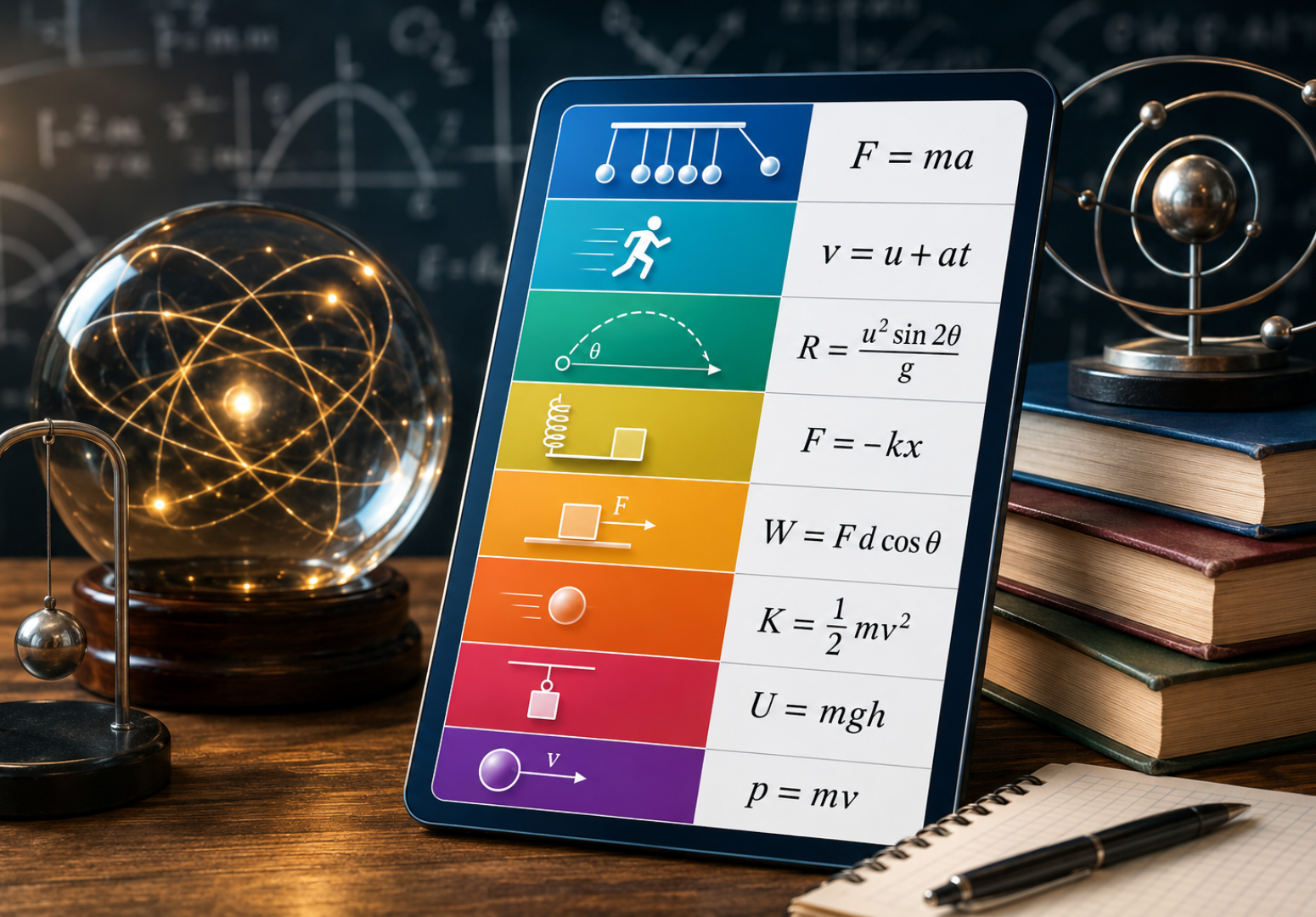
A physics reference table isn’t just a cheat sheet thrown together at the last minute. Done right, it’s an organized, visual summary of every formula, constant, and unit conversion you need across mechanics, thermodynamics, electricity, and optics. Students who build and actually use a physics reference table consistently tend to recall formulas faster during timed tests, simply because their brain has already seen the information laid out clearly multiple times before.
This article walks through eight practical solutions a physics reference table provides, how to build one properly, common mistakes students make, and why teachers often recommend creating your own rather than copying someone else’s. By the end, you’ll understand exactly why this simple tool deserves a permanent spot in your study routine.
Why Formulas Feel Overwhelming
Physics formulas pile up fast. By the time a student reaches mid-semester, they’re juggling kinematics equations, force calculations, energy formulas, and wave properties all at once. Without something to organize this information, it’s incredibly easy for formulas to blur together or get misremembered entirely.
The human brain isn’t great at holding dozens of abstract symbols in working memory, especially under exam pressure. A physics reference table solves this by externalizing that information onto paper or a digital document, freeing up mental space to actually solve problems rather than struggling to recall the formula itself.
There’s also a confidence factor here. Walking into a test knowing your physics reference table is well-organized and thorough removes a layer of anxiety. Students focus better when they trust their preparation, and a solid reference table builds exactly that kind of trust.
Building Your First Table
Getting started with a physics reference table doesn’t require fancy software. Many students simply use a notebook page divided into sections by topic: mechanics, electricity, thermodynamics, waves, and modern physics. For students who enjoy connecting concepts across subjects, checking out resources like this guide on mathematics used in games can show how formulas and real-world applications often overlap more than textbooks suggest.
Start broad before narrowing down. List major formula categories first, then fill in specific equations underneath each one. Include units next to every formula since unit confusion causes more lost exam points than people realize. A physics reference table without consistent units quickly becomes more confusing than helpful.
Color coding helps too, though it’s optional. Some students assign different colors to different physics branches, making visual scanning faster during review sessions. Whatever method you choose, consistency matters more than fancy formatting.
Organizing By Topic Area
A scattered physics reference table defeats its own purpose. Group formulas logically rather than listing them in the random order you encountered them throughout the semester. Mechanics formulas should sit together, separate from thermodynamics or electromagnetism sections.
Within each topic, order formulas by complexity. Start with basic definitions, like velocity and acceleration, before moving into combined equations involving multiple variables. This progression mirrors how concepts build on each other in actual coursework, making the table feel intuitive rather than arbitrary.
Some students add a small example calculation beside trickier formulas. This extra context turns a physics reference table from a static list into something closer to a quick-reference guide that actually teaches, not just reminds.
Constants Worth Memorizing Anyway
While a physics reference table holds most constants for you, certain values appear so frequently that memorizing them saves serious time. Gravitational acceleration, roughly 9.8 meters per second squared near Earth’s surface, shows up constantly in mechanics problems. Knowing it instantly speeds up calculations significantly.
Other useful constants include the speed of light, approximately 3 times 10 to the eighth meters per second, and Planck’s constant for quantum mechanics problems. Even with a reference table available, having these numbers memorized means less flipping back and forth during timed sections of an exam.
That said, less common constants, like the Stefan-Boltzmann constant or Avogadro’s number, are perfectly fine to leave on your physics reference table rather than memorizing. Prioritize based on how frequently a constant actually appears in your specific coursework.
Digital Versus Handwritten Versions
There’s an ongoing debate among students about whether a physics reference table should be handwritten or typed digitally. Handwriting forces slower, more deliberate engagement with the material, which research on learning retention generally supports as more effective for memory formation.
Digital versions, on the other hand, offer searchability and easy editing. If you’re constantly adding new formulas throughout the semester, a digital physics reference table built in a spreadsheet or document lets you reorganize without messy crossed-out sections. Some students even use color-coded spreadsheet cells to separate formula categories cleanly.
Honestly, a hybrid approach works well for many people. Handwrite your initial table to lock concepts into memory, then transfer it digitally for a clean final version you can print and bring to study sessions. Neither method is objectively superior; it depends on your personal learning style.
Avoiding Common Setup Mistakes
One frequent mistake involves cramming too much onto a single page, making the physics reference table visually overwhelming rather than helpful. White space matters. Cluttered tables actually slow down recall because your eyes struggle to locate the specific formula you need quickly.
Another mistake is copying formulas without truly grasping what each variable represents. If you don’t know what each symbol means, the formula becomes useless during application-based questions, even if it’s sitting right there on your table. Always write a short variable key alongside complex equations.
Students sometimes forget to update their physics reference table as new topics get introduced throughout the semester. A table built in week three and never touched again becomes increasingly outdated and incomplete by finals week, defeating its entire purpose.
Where Professionals Still Use These
According to data published by the Bureau of Labor Statistics, engineering and physical science occupations are projected to grow steadily over the coming decade, and professionals in these fields rely on reference materials similar to a physics reference table throughout their careers, not just during school exams.
Engineers, for instance, regularly consult quick-reference formula sheets when designing structures, circuits, or mechanical systems. The habit of organizing formulas clearly doesn’t disappear after graduation; it actually becomes more valuable in professional settings where mistakes carry real financial or safety consequences.
Researchers in physics labs also maintain personalized reference tables, often expanded with experimental constants specific to their field of study. The skill of building an effective physics reference table in school directly translates into organizational habits that benefit people well into their careers.
Customizing For Your Course
Not every physics reference table needs the same content. A table built for an introductory mechanics course looks dramatically different from one designed for an advanced electromagnetism class. Tailoring your table to match your specific syllabus prevents wasted effort on formulas you’ll never actually need.
Check your course outline early in the semester and map out which units will be covered. This lets you build your physics reference table progressively, adding sections as new material gets introduced rather than trying to predict everything upfront. It also keeps the table relevant rather than bloated with unnecessary information.
If your course allows a reference sheet during exams, pay close attention to what’s permitted. Some instructors allow only constants, while others permit full formula lists. Adjust your physics reference table accordingly so you’re not scrambling to create an exam-approved version the night before a test.
Memory Tricks That Complement It
A physics reference table works best alongside memory techniques rather than as a complete substitute for understanding. Mnemonics, for instance, help lock certain formula structures into memory even when the table isn’t physically available, like during oral exams or quick verbal quizzes.
Visualization techniques also pair well with reference tables. Picturing how a formula applies to a real scenario, like calculating the force needed to push a shopping cart, strengthens the connection between abstract symbols and tangible meaning. This dual approach, table plus visualization, reinforces learning far more effectively than either method alone.
Spaced repetition is another strong complement. Reviewing your physics reference table briefly every few days, rather than cramming once before a test, builds long-term retention. Even five minutes of casual review across multiple days outperforms a single two-hour cram session in most memory studies.
Using It During Practice Tests
Practice tests become significantly more productive when paired with a physics reference table nearby, especially during early preparation stages. Rather than getting stuck and frustrated on a forgotten formula, students can glance at their table, apply it, and keep moving through practice problems efficiently.
As exam day approaches, gradually wean yourself off relying on the table during practice sessions. This mimics actual exam conditions where reference materials might be restricted or unavailable entirely. The goal is for your physics reference table to become a training tool early on, not a permanent crutch you can’t function without.
Timing yourself during practice tests with limited table access also reveals which formulas you’ve truly internalized versus which ones still require lookup. This self-awareness helps prioritize last-minute review sessions more effectively before the actual exam.
Group Study And Shared Tables
Building a physics reference table collaboratively with classmates often catches gaps individual students might miss alone. Someone might remember a formula you completely forgot, while you might catch an error in someone else’s units or variable definitions.
Group study sessions focused specifically on comparing reference tables tend to spark useful discussions about why certain formulas work the way they do. This back-and-forth conversation deepens understanding beyond simple memorization, turning the reference table into a discussion tool rather than just a static document.
Sharing tables digitally, through shared documents or classroom forums, also helps students who missed certain lectures catch up quickly. If your school has resources like an education discussion forum, posting your physics reference table there can open up helpful peer feedback you might not get otherwise.
Formula Categories Worth Separating
Kinematics formulas deserve their own clearly marked section since they form the foundation for most mechanics problems. Velocity, acceleration, and displacement equations should sit together, ideally with a small diagram showing how each variable relates spatially.
Energy and work formulas form another distinct category. Kinetic energy, potential energy, and work-energy theorem equations often get confused with each other if grouped carelessly alongside unrelated topics. Keeping this section isolated on your physics reference table reduces unnecessary mixing of concepts during fast-paced exam situations.
Electricity and magnetism formulas typically require the most space due to sheer volume. Ohm’s law, capacitance equations, and magnetic force formulas all belong here, often with circuit diagrams included for visual clarity. This section tends to grow the most throughout a typical physics course, so leave extra room when initially designing your table layout.
When Tables Become Outdated
A physics reference table loses value if formulas get added but never reviewed afterward. It’s tempting to treat table-building as a one-time task, checked off the list once completed. Reality works differently. Formulas you don’t revisit periodically fade from memory regardless of how well-organized your table looks.
Set a recurring schedule, maybe once every two weeks, to skim through your entire physics reference table from start to finish. This consistent exposure keeps older material fresh while you continue adding newer formulas as the semester progresses. Treating it as a living document rather than a finished product makes a huge difference long-term.
Before major exams, do a complete audit of your table. Remove formulas that turned out to be irrelevant to your specific course, and double-check that nothing important got missed during regular updates. An outdated or incomplete physics reference table right before finals can cause unnecessary panic that’s easily avoidable with routine maintenance.
Mistakes During Actual Exams
Even with a solid physics reference table prepared, exam-day mistakes happen. Students sometimes pick the wrong formula because they didn’t read the question carefully enough to identify which variables were actually given. Always match given information against your table before committing to a specific equation.
Another common slip involves unit mismatches. If your physics reference table lists velocity in meters per second but the question provides kilometers per hour, forgetting to convert leads to wildly incorrect answers, even when the correct formula gets selected. Building unit-conversion notes directly into your table helps prevent this entirely avoidable error.
Rushing through formula selection under time pressure also causes mistakes. Even a well-built physics reference table can’t help if you’re flipping pages frantically instead of scanning calmly. Practicing with your table beforehand builds the muscle memory needed to locate formulas quickly without panic during real exam conditions.
Long-Term Academic Benefits
Students who consistently build physics reference tables throughout high school often find similar organizational systems useful in college-level science courses too. The habit of structuring information clearly transfers well beyond physics specifically, into chemistry, engineering, and even some advanced mathematics courses.
This skill also strengthens general study habits. Once students experience how much easier review becomes with an organized physics reference table, they often start applying similar formula-organization techniques to other subjects naturally, without anyone telling them to do so.
There’s a noticeable confidence boost too. Students who’ve built strong reference systems for themselves tend to approach difficult coursework with less anxiety overall, since they’ve already proven to themselves that complex material becomes manageable with the right organizational tools in place.
Frequently Asked Questions
What should a physics reference table include?
A solid physics reference table should include formulas organized by topic, relevant units, key constants, and brief variable definitions to avoid confusion during problem solving.
Is it better to handwrite or type a reference table?
Both work well. Handwriting strengthens memory through active engagement, while typed versions offer easier editing and searchability as your coursework expands throughout the semester.
How often should I update my reference table?
Update it every time a new topic gets introduced in class, and review the entire table every two weeks to keep older formulas fresh in memory.
Can a physics reference table help during professional work, not just exams?
Yes, many engineers and researchers maintain personalized reference tables throughout their careers, since organized formula access remains valuable well beyond academic settings.
Final Thoughts On This Tool
A physics reference table isn’t just busywork assigned by overly cautious teachers. It’s genuinely one of the most practical study tools available for managing the sheer volume of formulas physics throws at students throughout a typical course. From kinematics to electromagnetism, having everything organized clearly removes unnecessary stress during both practice sessions and actual exams.
Throughout this article, we’ve covered how to build one from scratch, common organizational mistakes, the debate between digital and handwritten formats, and how professionals continue using similar tools well into their careers. We also touched on memory techniques that pair nicely alongside a reference table, plus the importance of regular updates to keep it relevant.
If you haven’t built your own physics reference table yet, there’s no better time than now. Start small, organize by topic, and let it grow naturally alongside your coursework. Give it consistent attention rather than treating it as a one-time project, and you’ll likely notice formula recall becoming significantly less stressful by the time your next exam rolls around.