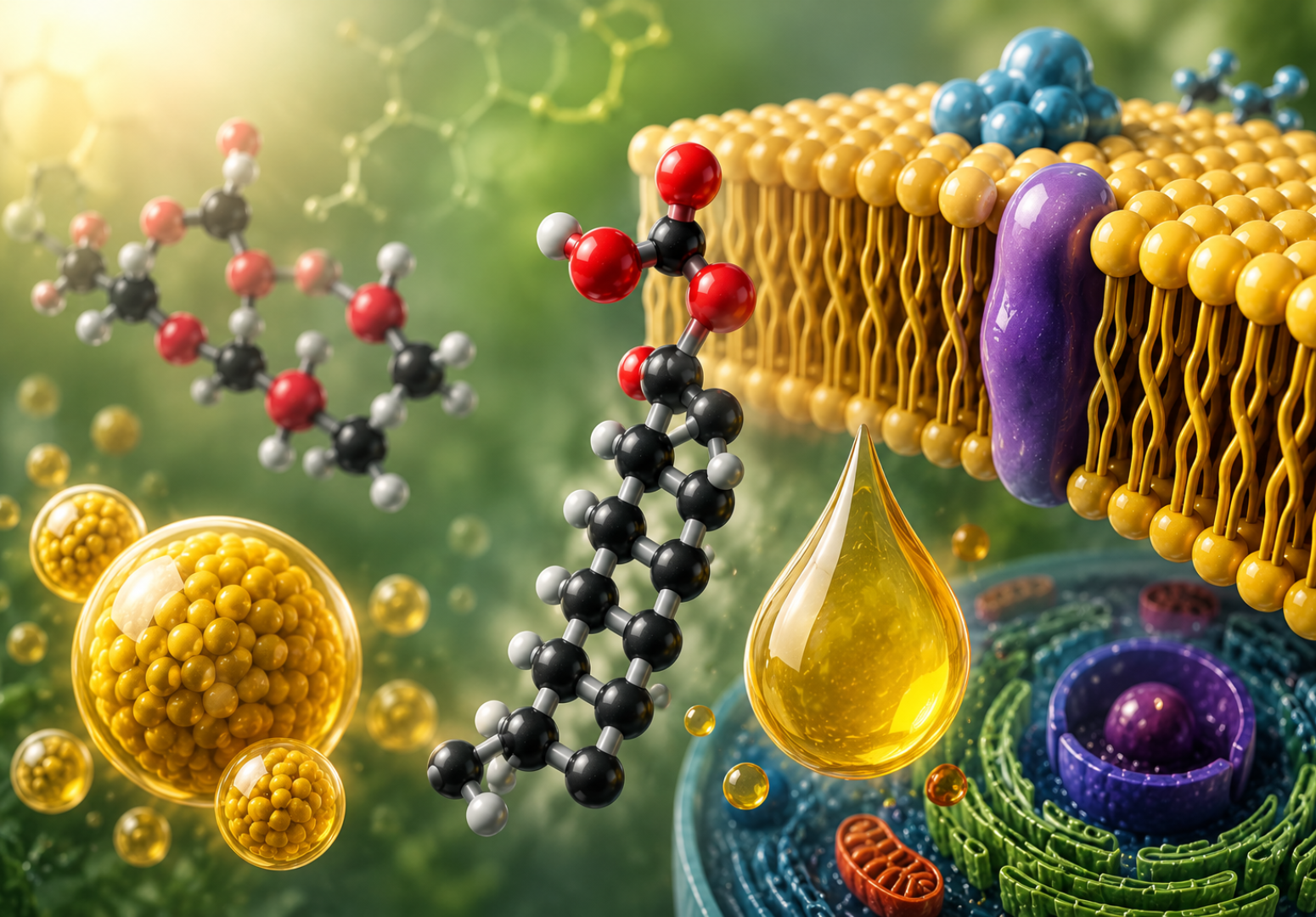
Biology has a way of presenting clean categories that reality refuses to cooperate with. Proteins have amino acids as monomers. Nucleic acids have nucleotides. Carbohydrates have monosaccharides. Then you get to lipids and suddenly the textbook gets uncomfortable. The lipids monomer question is one of the most genuinely contested topics in introductory biochemistry — not because scientists don’t understand lipids, but because lipids don’t follow the same polymerization rules as every other macromolecule class.
So what exactly is the lipids monomer? The honest answer is that lipids don’t have a true monomer in the classical sense. They aren’t polymers built from repeating identical subunits linked by the same type of bond. But they do have building blocks — glycerol and fatty acids — that combine to form larger lipid molecules. Whether those building blocks qualify as a lipids monomer depends on how strictly you define the term. This article gets into all of it: the structure of lipids, the role of glycerol and fatty acids, why the monomer question is genuinely complicated, and what it all means for how lipids function in living systems.
What Is a Monomer
Before tackling the lipids monomer question directly, it helps to be clear about what a monomer actually is. In polymer chemistry, a monomer is a small molecule that can bond repeatedly with other identical or similar monomers to form a long chain called a polymer. The key word is repeatedly — the same type of bond forms over and over, and the same type of subunit appears again and again along the chain.
Amino acids fit this definition perfectly. Each amino acid has an amino group and a carboxyl group, and peptide bonds form between them in a repeating pattern. Nucleotides have phosphate groups, sugars, and nitrogenous bases, and phosphodiester bonds link them in DNA and RNA chains. Glucose monomers link via glycosidic bonds to form starch, cellulose, and glycogen. The monomer concept works cleanly for all three of those macromolecule families. The lipids monomer question breaks this pattern, and that’s exactly why it deserves careful attention rather than a quick textbook answer.
Lipids Are Not True Polymers
This is the central point that most introductory courses gloss over: lipids are not technically polymers. A polymer is built from monomers using repetitive covalent bonding of the same type. Lipids don’t do this. A triglyceride, for example, is built from one glycerol molecule and three fatty acid chains — but those fatty acids don’t chain together; they each attach to glycerol independently. The resulting molecule has three ester bonds, not a repeating chain of the same bond type linking identical subunits.
This is why the lipids monomer concept is fundamentally different from the monomer concept in proteins or carbohydrates. If you look for a single repeating subunit in a lipid molecule, you won’t find one. You’ll find glycerol plus fatty acids — components that combine in a specific arrangement but don’t polymerize the way glucose monomers do in starch. For teachers who want to address this nuance without losing students in complexity, science education resources can help frame the lipids monomer debate in ways that stick without oversimplifying. The distinction matters because it shapes everything about how lipids behave chemically and biologically.
Glycerol as Lipids Monomer
If you had to name the lipids monomer for triglycerides, glycerol is the backbone molecule that holds the structure together. Glycerol is a three-carbon alcohol with a hydroxyl (OH) group on each carbon. It’s a small, water-soluble molecule on its own. In the context of fat synthesis, each of those three hydroxyl groups reacts with a fatty acid through a condensation reaction (also called esterification), releasing water and forming an ester bond.
The result is a triglyceride — one glycerol molecule esterified with three fatty acids. Glycerol itself doesn’t repeat or polymerize; there’s only one glycerol per triglyceride molecule. But it is the structural foundation of the lipid. Without glycerol, there’s no triglyceride. In this sense, calling glycerol a lipids monomer is partially justified — it’s a building block that participates in forming the larger lipid molecule — but it doesn’t repeat the way a true monomer does. Some textbooks use the term loosely and call glycerol the monomer of fats, which is convenient for teaching but technically imprecise.
Fatty Acids as Lipids Monomer
Fatty acids are the other major component in the lipids monomer discussion, and arguably more important than glycerol for determining the properties of the resulting lipid. A fatty acid is a long hydrocarbon chain — typically 12 to 24 carbons long — with a carboxyl group (COOH) at one end. That carboxyl group is what reacts with glycerol’s hydroxyl groups to form ester bonds in triglycerides.
Fatty acids come in two broad categories: saturated and unsaturated. Saturated fatty acids have no double bonds between carbon atoms — every carbon is bonded to as many hydrogen atoms as possible. They tend to be solid at room temperature (think butter or lard). Unsaturated fatty acids have one or more double bonds in the carbon chain, creating kinks that prevent the molecules from packing tightly together. They tend to be liquid at room temperature (think olive oil or fish oil). When people describe the lipids monomer as “fatty acids and glycerol,” the fatty acids are contributing both structural length and chemical character to the final lipid molecule. Three fatty acids attach to one glycerol to form a triglyceride, making fatty acids more numerous than glycerol but still not truly repeating monomers in the polymer sense.
Phospholipids and Their Building Blocks
Phospholipids are the lipids that form biological membranes, and their building blocks add another layer to the lipids monomer conversation. A phospholipid is similar to a triglyceride but with one crucial difference: one of the three fatty acid chains is replaced by a phosphate group, which is usually attached to a small organic molecule like choline, serine, or ethanolamine.
The result is a molecule with a polar, hydrophilic head (the glycerol-phosphate region) and two nonpolar, hydrophobic tails (the two fatty acid chains). This amphipathic structure is what makes phospholipids so uniquely suited to forming cell membranes. In water, phospholipids spontaneously arrange themselves into bilayers with the hydrophilic heads facing outward toward the water and the hydrophobic tails tucked inward away from it. The building blocks of a phospholipid — glycerol, two fatty acids, a phosphate group, and an organic head group — are more complex than a simple lipids monomer, which is another reason the monomer concept fits lipids so awkwardly.
Waxes and Steroid Structures
Triglycerides and phospholipids aren’t the only lipids worth considering when you’re working through the lipids monomer question. Waxes and steroids are also classified as lipids, and their structures are quite different from the glycerol-fatty acid framework.
Waxes are esters of a fatty acid and a long-chain alcohol (not glycerol). They have no glycerol backbone at all. Beeswax, carnauba wax, and the waxy cuticle on plant leaves are all examples. The building blocks of a wax are a fatty acid and an alcohol — no glycerol involved. Steroids are even more structurally distinct. Cholesterol, testosterone, estrogen, and cortisol are all steroids, and their backbone is a four-ring carbon structure with no fatty acid chains and no glycerol at all. They’re classified as lipids because they’re hydrophobic and soluble in organic solvents, not because they share building blocks with triglycerides. This range of structures makes the lipids monomer concept even harder to pin down — there’s no single building block that applies to all lipids the way glucose applies to all polysaccharides.
Why Lipids Lack True Monomers
According to research published by the National Center for Biotechnology Information, lipids are defined not by their structural similarity but by their shared physical property of being hydrophobic — insoluble in water and soluble in nonpolar solvents. That definition groups together molecules with wildly different architectures: triglycerides, phospholipids, steroids, waxes, fat-soluble vitamins, and terpenes. Because lipids are defined by a physical property rather than a structural blueprint, there is no single lipids monomer that applies to all members of the group.
This is a genuinely important conceptual point. When we say glucose is the monomer of polysaccharides, we mean every polysaccharide is built from glucose (or similar monosaccharides) linked in a repeating pattern. We can’t say anything analogous for lipids. The structure of cholesterol shares nothing with the structure of a triglyceride beyond the fact that both dissolve in hexane. The lipids monomer question has no single clean answer because the lipid category itself is defined by behavior rather than structure. That’s not a failure of the science — it’s an accurate reflection of chemical reality.
Condensation Reactions in Lipid Formation
Even though lipids aren’t true polymers, the bonds that form between their building blocks are made through the same type of reaction that links monomers in other macromolecules: condensation reactions, also called dehydration synthesis reactions. In each case, a water molecule is released when a bond forms between two components.
When a fatty acid joins to glycerol, the carboxyl group of the fatty acid reacts with a hydroxyl group of glycerol. A water molecule is lost and an ester bond forms. This happens three times to produce a triglyceride — three ester bonds, three water molecules released. The same condensation chemistry works in reverse during hydrolysis, which is how your digestive system breaks down dietary fats. Lipase enzymes in the small intestine cleave the ester bonds in triglycerides, releasing glycerol and individual fatty acids that can then be absorbed by intestinal cells. Even without a true lipids monomer in the polymer sense, the condensation and hydrolysis chemistry of lipids parallels what happens in proteins, carbohydrates, and nucleic acids closely enough to unify the biochemistry across all four macromolecule families.
Lipids Monomer in Textbook Context
Most high school and introductory college biology courses teach that the lipids monomer is “glycerol and fatty acids.” This is a simplification, but it’s a useful one for getting students started. The important thing is to know what that phrase means structurally: one glycerol and three fatty acids combine to form one triglyceride, with three ester bonds and three water molecules released in the process.
Where this teaching shortcut breaks down is when students encounter phospholipids, steroids, or waxes and try to apply the same “glycerol and fatty acids” formula. Phospholipids have a phosphate group and only two fatty acids. Steroids have neither glycerol nor fatty acids. Waxes have a long-chain alcohol instead of glycerol. If you’ve internalized the lipids monomer as “glycerol plus fatty acids” as a universal rule, these exceptions are confusing. The better mental model is to think of glycerol and fatty acids as the building blocks specifically of fats and oils (triglycerides) and phospholipids, while recognizing that the broader lipid category has more structural diversity than any single monomer concept can capture.
Comparing Lipids to Other Macromolecules
Putting the lipids monomer question in context with the other three macromolecule families makes the contrast sharper and more useful. Proteins are polymers of amino acids — 20 different types, all sharing the same backbone structure and linked by peptide bonds. The monomer concept fits perfectly. Nucleic acids are polymers of nucleotides — each nucleotide has a sugar, a phosphate, and a nitrogenous base, and phosphodiester bonds link them in a repeating pattern. Again, a clean fit.
Carbohydrates are polymers of monosaccharides. Glucose, fructose, and galactose are the main monomers, linked by glycosidic bonds into disaccharides, oligosaccharides, and polysaccharides. The monomer concept works here too, though there’s more variety in the specific bonds formed (alpha vs beta glycosidic bonds) and the branching patterns. Lipids are the outlier. The lipids monomer concept applies loosely to triglycerides and phospholipids if you accept “glycerol and fatty acids” as a working definition, but breaks down completely for steroids and waxes. This is why many biochemists prefer to describe lipids not as polymers with monomers but as a diverse group of hydrophobic molecules with varied structures and shared physical properties.
Saturated Versus Unsaturated Fatty Acids
The structure of fatty acids — particularly whether they’re saturated or unsaturated — has enormous consequences for the physical and biological properties of the lipids they form. Saturated fatty acids pack tightly together because their straight chains can lie flat against each other. This tight packing raises the melting point, making saturated fats solid at room temperature. Butter, coconut oil, and animal fats are high in saturated fatty acids.
Unsaturated fatty acids have one or more double bonds that introduce kinks into the carbon chain. These kinks prevent tight packing, which lowers the melting point and keeps the lipid liquid at room temperature. Olive oil, avocado oil, and fish oils are high in unsaturated fatty acids. The degree of unsaturation also affects how the body processes and uses these lipids. Trans fats — artificially hydrogenated unsaturated fats with a specific geometry around the double bond — behave more like saturated fats structurally and have been strongly linked to cardiovascular disease risk. When you’re thinking about the lipids monomer as fatty acids, the specific structure of those fatty acids matters enormously for the biological outcome.
Lipid Functions in Living Systems
Understanding the lipids monomer and building block structure helps explain why lipids are so functionally versatile in biological systems. Triglycerides, built from glycerol and three fatty acids, serve primarily as long-term energy storage molecules. They’re the most energy-dense macromolecule, yielding about 9 kilocalories per gram compared to 4 kilocalories per gram for carbohydrates and proteins. That’s why the body stores excess energy as fat rather than as glycogen.
Phospholipids, built from glycerol, two fatty acids, and a phosphate head group, are the structural foundation of every cell membrane in every living organism on Earth. The lipid bilayer they form controls what enters and exits the cell, provides a platform for membrane proteins, and maintains the chemical environment inside the cell. Steroids, with their four-ring backbone, serve as hormones (estrogen, testosterone, cortisol), as the structural component of cell membranes in animals (cholesterol), and as bile acids that aid fat digestion. Waxes provide waterproofing on plant surfaces and insect cuticles. All of these functions are possible because of the hydrophobic nature that defines lipids as a class — a property that flows directly from the nonpolar carbon-hydrogen bonds in their fatty acid chains and hydrocarbon backbones.
Lipid Digestion and Absorption
Digestion of dietary lipids is a good practical context for seeing the lipids monomer concept in action. When you eat fat, it arrives in the small intestine as large fat droplets — largely insoluble in the watery digestive environment. Bile salts, produced by the liver and stored in the gallbladder, act as emulsifiers that break these large droplets into smaller micelles, increasing the surface area available to digestive enzymes.
Pancreatic lipase then cleaves the ester bonds in triglycerides, producing two fatty acids and a monoglyceride (glycerol with one fatty acid still attached) from each triglyceride molecule. These products — essentially the lipids monomer components — are absorbed by intestinal epithelial cells, reassembled into triglycerides inside the cells, packaged into lipoprotein particles called chylomicrons, and released into the lymphatic system for transport throughout the body. The fact that lipids must be broken down to their glycerol and fatty acid components for absorption and then reassembled afterward reflects the same building-block logic that applies to protein digestion (broken to amino acids, reassembled) and carbohydrate digestion (broken to monosaccharides, transported as glucose). The lipids monomer concept, even if technically imperfect, accurately describes the digestion and reassembly process.
Lipids in Cell Membrane Structure
The cell membrane deserves its own attention when discussing the lipids monomer because it represents one of the most elegant structural applications of lipid chemistry in biology. Every cell membrane is a phospholipid bilayer — two layers of phospholipid molecules arranged tail-to-tail, with hydrophilic heads facing the aqueous environments inside and outside the cell and hydrophobic tails forming a water-excluding interior.
This structure arises spontaneously from the amphipathic nature of phospholipids — a direct consequence of having a polar head group (derived from the glycerol-phosphate building block) and two nonpolar fatty acid tails. The membrane is not static; it’s fluid at physiological temperatures, with individual phospholipid molecules moving laterally within their layer. The fluidity depends on the degree of unsaturation of the fatty acids — more double bonds mean more fluidity. Cholesterol, intercalated among the phospholipids, modulates membrane fluidity by preventing the fatty acid tails from packing too tightly at low temperatures while limiting excessive movement at high temperatures. This regulatory role of cholesterol illustrates how different lipid types — phospholipids (with their glycerol and fatty acid building blocks) and steroids (with their ring backbone) — work together in the same biological structure.
FAQ
What is the lipids monomer?
The lipids monomer is most commonly described as glycerol and fatty acids, which are the building blocks of triglycerides and phospholipids. However, unlike proteins or carbohydrates, lipids are not true polymers — their building blocks don’t repeat in a chain linked by identical bonds. Glycerol provides the three-carbon backbone and fatty acids attach to it via ester bonds. For steroids and waxes, different building blocks apply, which is why no single lipids monomer covers all lipid types.
Why don’t lipids have a true monomer like proteins do?
Lipids are classified by their physical property of being hydrophobic, not by a shared structural blueprint. Proteins are defined by their structure — all are chains of amino acids linked by peptide bonds. Lipids include triglycerides, phospholipids, steroids, and waxes, which have completely different molecular architectures. Without a shared structural framework, there’s no single repeating subunit that could serve as a universal lipids monomer for the entire class.
Are fatty acids considered the lipids monomer?
Fatty acids are one of the two key building blocks of triglycerides and phospholipids, making them part of what is loosely called the lipids monomer. Three fatty acids attach to one glycerol molecule via ester bonds to form a triglyceride. However, fatty acids don’t repeat in a polymer chain the way amino acids do in a protein. They attach in parallel to glycerol rather than end-to-end, so the term monomer applies only in a loose, descriptive sense.
How are lipids broken down during digestion?
Lipids are broken down by lipase enzymes in the small intestine. Bile salts first emulsify fat droplets into smaller micelles to increase surface area. Pancreatic lipase then cleaves the ester bonds between glycerol and fatty acids in triglycerides, releasing two free fatty acids and a monoglyceride per triglyceride molecule. These components — essentially the lipids monomer building blocks — are absorbed by intestinal cells, reassembled into triglycerides, and packaged into chylomicrons for transport through the lymphatic system.
Conclusion
The lipids monomer question is one of those topics that rewards honesty over convenience. The convenient answer — “glycerol and fatty acids” — works well enough for triglycerides and gives students a working model for understanding fat structure and digestion. But it breaks down when applied to steroids, waxes, or fat-soluble vitamins, and it obscures the more important truth that lipids aren’t polymers in the classical sense at all.
That truth is actually more interesting than the simplified version. Lipids are defined by how they behave in water — they don’t dissolve — and that single shared property groups together molecules with wildly different structures and functions. The lipids monomer concept captures part of the story for some lipids, particularly fats and phospholipids, but the full picture requires recognizing that the lipid category is structurally diverse in a way that proteins and carbohydrates simply aren’t. Glycerol and fatty acids as the lipids monomer building blocks explain energy storage, membrane structure, fat digestion, and lipid transport. They don’t explain cholesterol, steroid hormones, or plant waxes. Keep both parts of that picture in mind and the biochemistry of lipids becomes significantly clearer, more accurate, and genuinely more useful for everything from understanding nutrition to cell biology to pharmacology.